Infection Chain and Persistence Mechanisms
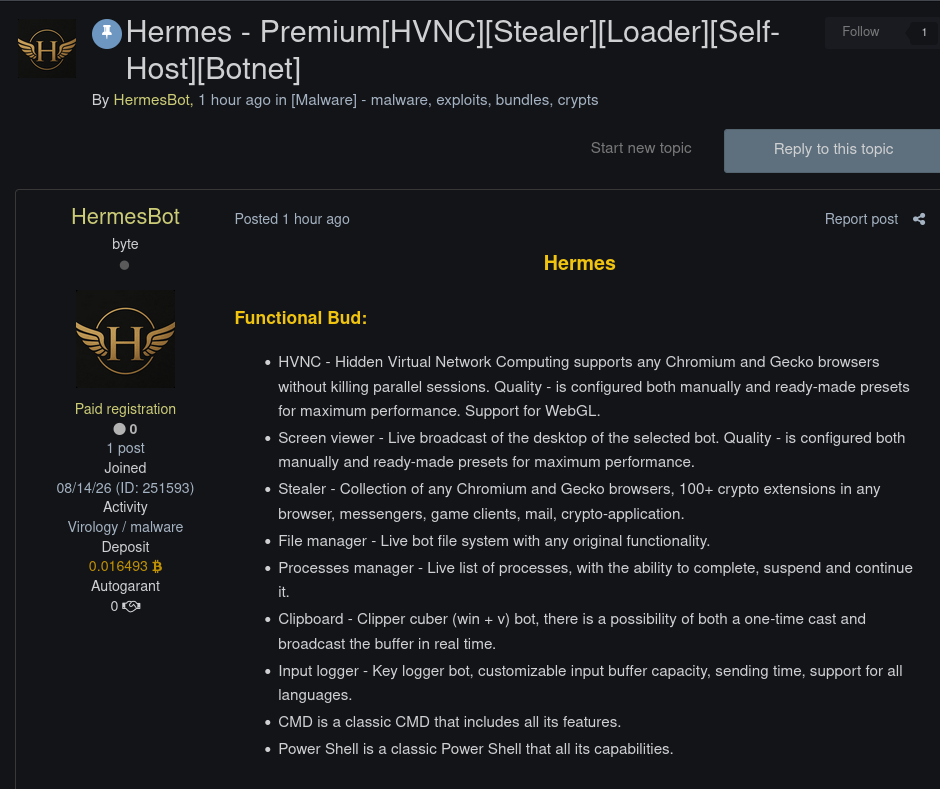
The infection chain for malware distributed under a Malware-as-a-Service (MaaS) model typically relies on diverse distribution pipelines controlled by individual threat actors. Initial execution vectors for Hermes commonly leverage malicious spam attachments, SEO poisoning leading to trojanized software installers, malvertising lures, and malicious archive distribution.
Execution and Hidden Desktop Spawning
Once initial execution is achieved on the target operating system, Hermes initiates defense evasion routines by establishing an isolated virtual desktop. Utilizing Windows desktop management Application Programming Interfaces (APIs), the malware creates an invisible interactive workspace (HVNC):
The malware invokes CreateDesktopA or CreateDesktopW alongside SetThreadDesktop to instantiate a parallel desktop session detached from the primary user interface.
Hidden browser instances are launched within this isolated context, allowing the threat actor to navigate web sessions, manipulate active corporate Single Sign-On (SSO) sessions, and bypass multi-factor authentication triggers without displaying visual indicators to the victim.
The malware manages local execution persistence by establishing scheduled tasks or Registry Run keys, ensuring survivability across system restarts.
Enterprises managing extensive remote workforces and cloud accounts should continuously audit their public footprint. Using tools such as FemtoSec's Dark Web Scanner allows organizations to evaluate whether leaked credentials and employee credentials harvested by infostealers have appeared on underground markets.