Understanding VoidCrypt PE Crypter Threats
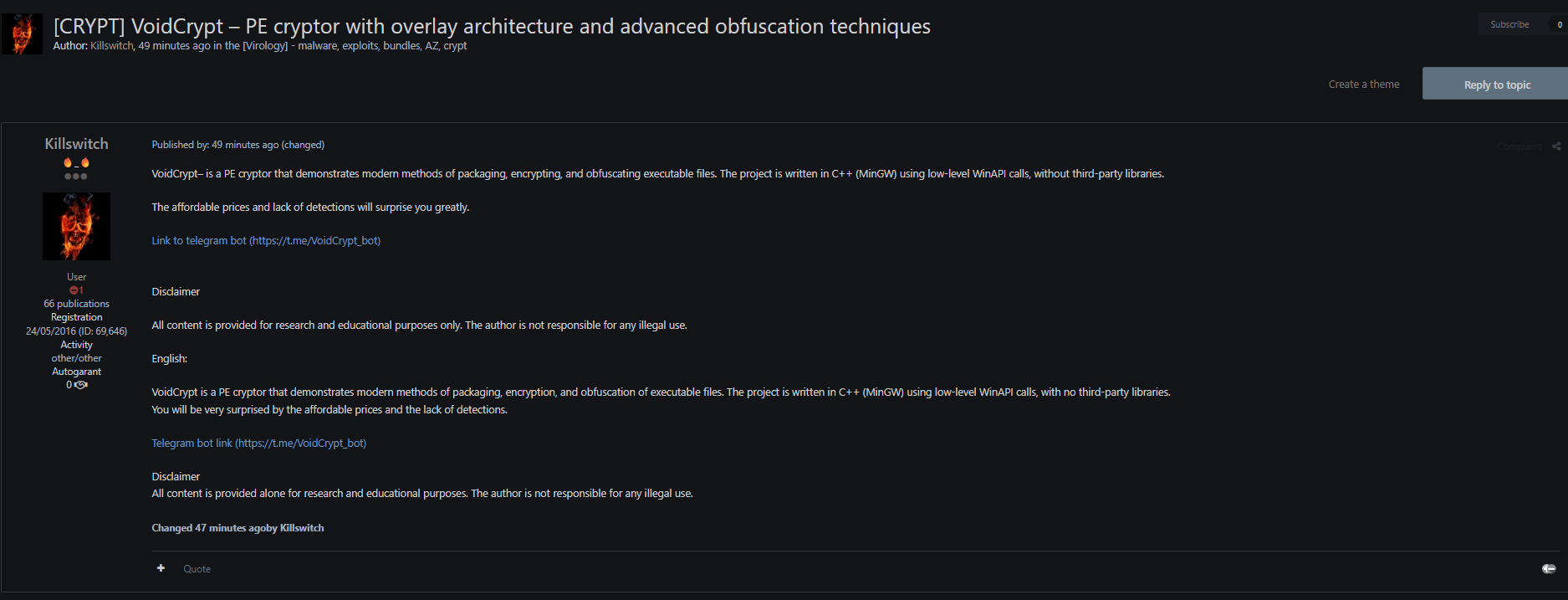
A new threat actor is marketing the VoidCrypt PE crypter, a tool designed to obfuscate executable files to evade security solutions. We break down the technical implications for enterprise defense.


Key Takeaways
- VoidCrypt is a newly identified PE crypter service designed to hide malicious files from security scanners.
- The service leverages low-level Windows APIs to achieve advanced obfuscation and lower detection rates.
- Standard signature-based detection is increasingly ineffective against these types of specialized crypter tools.
- Enterprises must focus on behavioral monitoring and proactive attack surface management to detect and neutralize obfuscated threats.
Recent reports indicate a threat actor is marketing the VoidCrypt PE crypter, an advanced obfuscation service specifically engineered to modify, encrypt, and package Windows executable files. By utilizing low-level Windows API calls, this service aims to bypass standard security detection mechanisms, presenting a renewed challenge for security operations teams tasked with maintaining robust endpoint protection.
The Mechanics of Modern Crypter Services
Crypters like the one identified in recent underground forum activity serve a singular, malicious purpose: to cloak the true nature of an executable from signature-based and heuristic-based security tools. By obfuscating the code, attackers can hide the malicious payload, ensuring it remains undetected as it moves through initial delivery phases such as phishing emails or drive-by downloads.
For enterprise security, the primary concern is the potential reduction in detection rates by traditional antivirus and endpoint detection and response (EDR) solutions. When a threat actor can successfully wrap a payload in a layer of proprietary encryption or obfuscation, standard file-based scanning may fail, necessitating a move toward behavioral analysis and deep Penetration Testing to identify how these files behave once executed in the environment.
Strategic Defense Against Obfuscated Threats
Relying solely on signature-based detection is no longer sufficient. Enterprise security teams must shift toward a proactive posture. If you suspect that your organization's perimeter might already be facing targeted threats, you should consider using FemtoSec's Dark Web Scanner to check for leaked credentials or indicators of previous compromise that attackers often use as a precursor to deploying custom malware packages.
Effective mitigation requires a multi-layered approach:
Behavioral Monitoring: Focus on identifying suspicious processes that exhibit unauthorized system calls or memory injection techniques, which are common indicators of bypassed payloads.
Attack Surface Reduction: Minimize your exposure by continuously auditing your infrastructure through Attack Surface Management to ensure that there are no soft entry points available for initial malware delivery.
Memory Forensics: Because many crypters only reveal their true nature upon execution in memory, investing in endpoint security that performs robust memory scanning is critical.
Free exposure check
Dark Web Scanner
check dark web mentions, compromised account indicators, malware log signals, public breach exposure, and recent underground market activity for your domain.
The Importance of Proactive Offensive Validation
The rise of specialized crypters demonstrates that adversaries are continuously iterating on their evasion techniques. By leveraging offensive security practices, organizations can better understand how these obfuscated files attempt to interact with their systems. Regular red teaming exercises can expose gaps in current detection capabilities, allowing teams to tune their security policies and reduce the risk of successful execution.
Ultimately, the challenge is not just identifying the tool but recognizing the broader operational threat. When services like VoidCrypt become commoditized, the barrier to entry for cybercriminals drops significantly, leading to higher volumes of targeted, harder-to-detect malware campaigns. Strengthening your internal processes through rigorous compliance and defensive infrastructure is the only viable path to long-term resilience.
How to Defend Against Similar Threats
- Implement robust behavioral analysis on all endpoints to catch unauthorized process activities.
- Regularly audit external-facing infrastructure to prevent the initial delivery of malicious payloads.
- Conduct frequent offensive security testing to identify detection gaps before they are exploited by attackers.
- Monitor for indicators of compromise that may suggest an actor is prepping for a custom malware deployment.
Threat Intel FAQ
What is a PE crypter like VoidCrypt?
How can my organization protect against obfuscated malware?
Could a similar threat affect your organization?
If your team may be exposed to a similar threat, FemtoSec can help validate blast radius, prioritize remediation, and connect the issue to a practical security program.
Related Threats
October 7, 2026
AbkoRAT License Sale Fuels Remote Surveillance Threat
Underground forums have observed threat actors commercializing AbkoRAT, a commercial Remote Access Trojan engineered for stealthy surveillance, multimedia interception, credential harvesting, and arbitrary command execution across compromised enterprise hosts.
October 1, 2026
FATETRAFFIC Threat Actor Sells Stealer Logs
A threat actor has advertised a batch of 3,100 FATETRAFFIC stealer logs on underground cybercrime forums. The archive contains harvested browser credentials, active session tokens, and endpoint metadata collected through widespread information-stealer malware operations.

September 18, 2026
Hermes Stealer Emerges with HVNC and Token Theft
A new malware-as-a-service offering named Hermes has surfaced on underground forums, bundling hidden virtual desktop control, browser credential harvesting, crypto wallet theft, and remote command execution.