Deceptive QR Code Threats and Deep Link Abuse
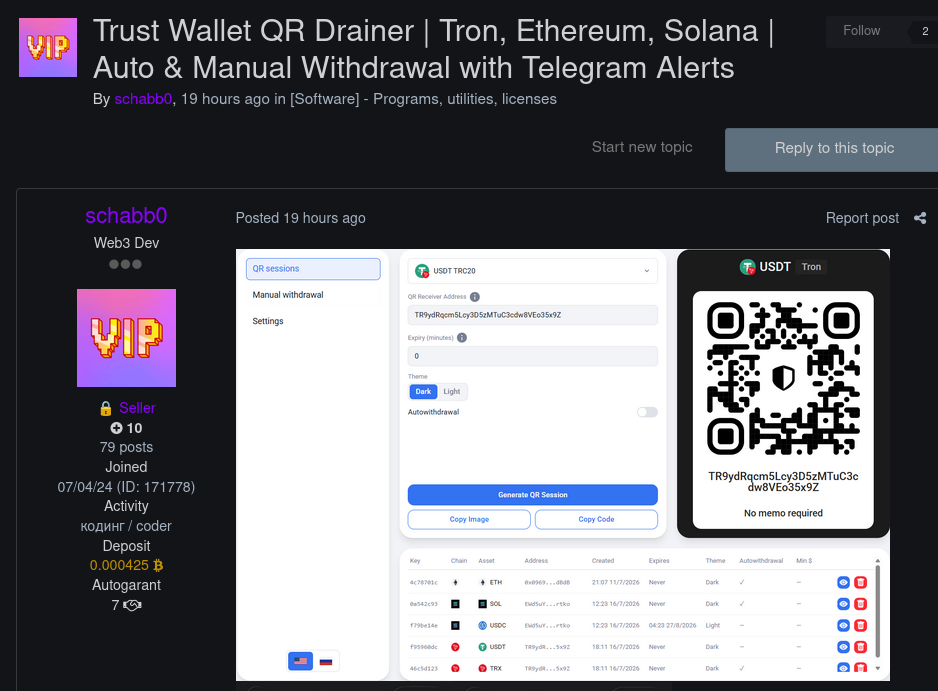
The core mechanism of this cryptocurrency drainer hinges on social engineering rather than a zero-day exploit in the wallet software. Cybercriminals distribute highly polished, malicious QR codes through messaging channels such as Telegram, compromised web portals, and targeted phishing pages. These QR codes are frequently embedded within realistic screenshots of official wallet notifications or payment interfaces, designed to establish instant visual credibility with the target. When an administrator or treasury manager scans the code, the underlying deep link exploits the legitimate Trust Wallet deep link handler. This routing mechanism allows the attacker to evade basic security controls and bypass standard warning filters that typically block suspicious external URLs.
By routing the connection through a trusted domain (such as link.trustwallet.com), the attacker tricks both the operating system and the user into believing the subsequent transaction is entirely safe. The link immediately forwards the browser to an attacker-controlled, Netlify-hosted, or dynamically generated phishing landing page. Because the initial redirect originated from a trusted domain, the victim is far less likely to scrutinize the destination URL. This technique of deep link manipulation significantly lowers user suspicion, paving the way for the critical exploitation phase of the attack chain.
Technical Anatomy of the Attack Chain
To establish a resilient defense, security teams must understand the exact technical phases of this multi-chain drainer, which covers Tron, Ethereum, and Solana networks. The attack chain unfolds systematically across five distinct phases, moving from initial contact to the final exfiltration of assets.
Phase 1: Initial Access and QR Poisoning
The threat actor begins by placing malicious QR codes into trusted enterprise communication channels, fraudulent decentralized applications (dApps), or direct spearphishing messages. These codes are specifically preconfigured with redirect parameters pointing to malicious infrastructure. Threat actors can use customized scripts to generate these QR codes on the fly, allowing them to tailor campaigns to specific corporate victims or departments.
Phase 2: Deep Link Abuse and Evasion
Once the victim scans the QR code, the device processes the URI scheme. The link uses the official Trust Wallet structure to execute a redirect parameter. By utilizing this trusted gateway, the connection successfully evades standard edge firewalls and endpoint security tools that do not inspect deep link redirect payloads. The victim is then seamlessly routed to the phishing portal, which perfectly replicates the user experience of a standard Web3 application.
Phase 3: Network Switching and Wallet Connection
Upon arriving at the malicious landing page, the script immediately detects the user's active wallet configuration. It prompts the victim to establish a Web3 connection. Depending on the targeted asset, the landing page will initiate a network switch request. For example, if the attacker is targeting Tether (USDT) on the BNB Smart Chain, the page forces a switch to that specific network. The victim, believing they are logging in to execute a routine invoice settlement or verification, approves the network switch and grants standard wallet connection permissions.
Phase 4: Covert Approval Execution
This is the most critical phase of the attack. Rather than presenting a simple transfer screen, the attacker's front-end script displays a deceptive payment portal requesting the user to "Send USDT" or confirm a transaction. When the user clicks the confirmation button, the malicious JavaScript does not trigger a standard transfer transaction. Instead, it executes an ERC-20 approve() smart contract function call. This approval is configured with a spender address pointing directly to the attacker's malicious contract, and the approved amount is set to MaxUint256 (which represents an infinite value of 2^256 - 1). While the wallet user interface may show a generic approval warning, the user often clicks past it because the web interface has convinced them they are performing a routine transaction. Through our dedicated Smart Contract Auditing services, FemtoSec helps organizations analyze contract calls and establish guardrails to prevent such unauthorized interactions.
Phase 5: Automated Draining and Telemetry Exfiltration
Once the transaction is signed and broadcasted to the blockchain network, the drainer's backend takes immediate control. The malicious script utilizes integrated Telegram Bot APIs to transmit real-time telemetry back to the attacker's administration channel. This telemetry includes the victim's public address, the specific transaction hash, and the wallet's total balance. Armed with the permanent, unlimited approval contract on the blockchain, the attacker can programmatically invoke the transferFrom() method. This allows the threat actor to sweep all targeted assets out of the corporate wallet into their personal custody, either immediately or at a later date when the wallet receives new funding.