TrickMo Android Malware Evolves via TON Blockchain
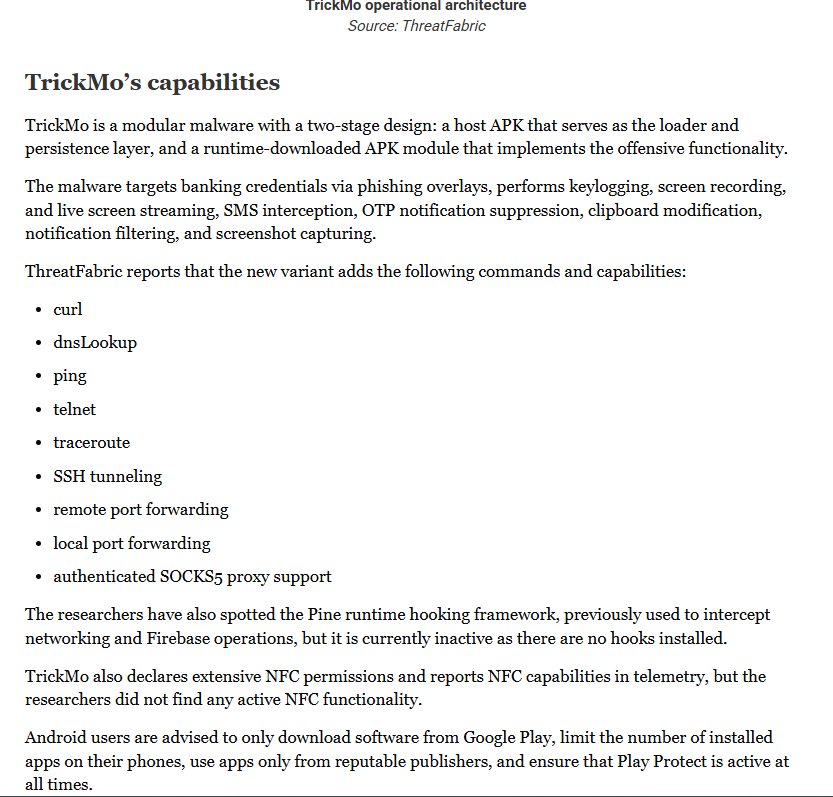
A sophisticated variant of the TrickMo banking trojan is now using The Open Network (TON) blockchain for its command-and-control operations. This evolution poses new challenges for detection and mobile threat mitigation.

Key Takeaways
- TrickMo banking trojan has evolved to use the TON blockchain for C2 communications.
- This shift complicates detection as traffic mimics decentralized network patterns.
- The malware continues to use phishing overlays and SMS interception to steal credentials.
- Targets primarily include users of European banking and cryptocurrency platforms.
Evolving Threat Landscapes: TrickMo and Blockchain Infrastructure
The recent discovery of the TrickMo Android banking trojan represents a significant shift in mobile threat tactics. By integrating The Open Network (TON) blockchain as a channel for command-and-control (C2) communication, the threat actors behind TrickMo are attempting to obfuscate their traffic, making standard network-based detection significantly more difficult. Unlike traditional C2 setups that rely on clear-text or standard encrypted web traffic, blockchain-based protocols allow for a higher degree of decentralization and traffic camouflage.
The Mechanism of Deception
ThreatFabric, which identified this specific variant, noted that TrickMo continues to target European banking and cryptocurrency users. By masquerading as legitimate applications, the malware gains the necessary permissions to intercept SMS communications and display malicious phishing overlays. These overlays are designed to harvest credentials, MFA codes, and sensitive financial information. The pivot to blockchain infrastructure for C2 indicates that threat actors are actively seeking to evade detection by security teams that may not have deep visibility into crypto-protocol traffic.
Implications for Enterprise Security
For organizations operating in the financial and enterprise sectors across the GCC, this development highlights the need for a more robust approach to Vulnerability Assessments. Because the malware exploits user trust through social engineering and phishing, technical controls alone are insufficient. We must prioritize a defense-in-depth strategy that includes:
Enhanced Endpoint Protection: Continuous monitoring of mobile device integrity.
Behavioral Analysis: Identifying anomalous application behavior rather than relying on signature-based detection.
Advanced Visibility: Strengthening the ability to inspect traffic patterns, even when they masquerade as decentralized protocols.
Our experience shows that attackers thrive when there is a gap between standard security posture and evolving offensive tactics. Regular Penetration Testing is essential to validate whether your current security controls can detect or block such sophisticated command-and-control mechanisms. By simulating how these banking trojans operate within your internal environment, your security teams can better configure egress filtering and behavioral alerts to neutralize the threat before it impacts your enterprise data.
Proactive Defense Against Emerging Threats
The use of blockchain for C2 is not merely a technical novelty; it is a strategic maneuver to increase the resilience of the botnet. As mobile threats continue to mature, the gap between benign applications and malicious payloads narrows. Enterprises must move beyond legacy security models and adopt an AI-driven, proactive posture that adapts in real-time to new indicators of compromise (IoCs).
Final Assessment
The adaptation of TrickMo demonstrates the persistence of adversaries targeting the financial services sector. Organizations should review their mobile application management (MAM) and device security policies immediately. At FemtoSec, we emphasize that proactive security is a continuous process. By identifying potential exposure points through our Attack Surface Management capabilities, we ensure that your organization stays ahead of these evolving threats.
How to Defend Against Similar Threats
- Audit mobile devices within the enterprise for unauthorized or suspicious applications.
- Strengthen network monitoring to identify non-standard traffic patterns originating from mobile assets.
- Implement comprehensive endpoint security that includes behavioral analysis for mobile apps.
- Conduct regular penetration testing to identify gaps in mobile device security posture.
Threat Intel FAQ
How does the use of blockchain change detection for TrickMo?
What is the primary risk of this TrickMo variant for enterprise users?
Could a similar threat affect your organization?
If your team may be exposed to a similar threat, FemtoSec can help validate blast radius, prioritize remediation, and connect the issue to a practical security program.
Related Threats
October 19, 2026
Rwanda Health Ministry 5.7 GB Data Breach Analysis
An illicit forum listing claims the exfiltration and sale of 5.7 GB of citizen and staff records from the Rwanda Ministry of Health, exposing personal identifiers and highlighting the threat of upstream infostealer compromises.
October 7, 2026
AbkoRAT License Sale Fuels Remote Surveillance Threat
Underground forums have observed threat actors commercializing AbkoRAT, a commercial Remote Access Trojan engineered for stealthy surveillance, multimedia interception, credential harvesting, and arbitrary command execution across compromised enterprise hosts.
October 5, 2026
XWorm V3.0 RAT License Listed for Sale on Darknet
Underground advertisements offering commercial licenses for XWorm V3.0 highlight the persistent threat of modular Remote Access Trojans capable of surveillance, keylogging, and complete Windows endpoint compromise across enterprise environments.