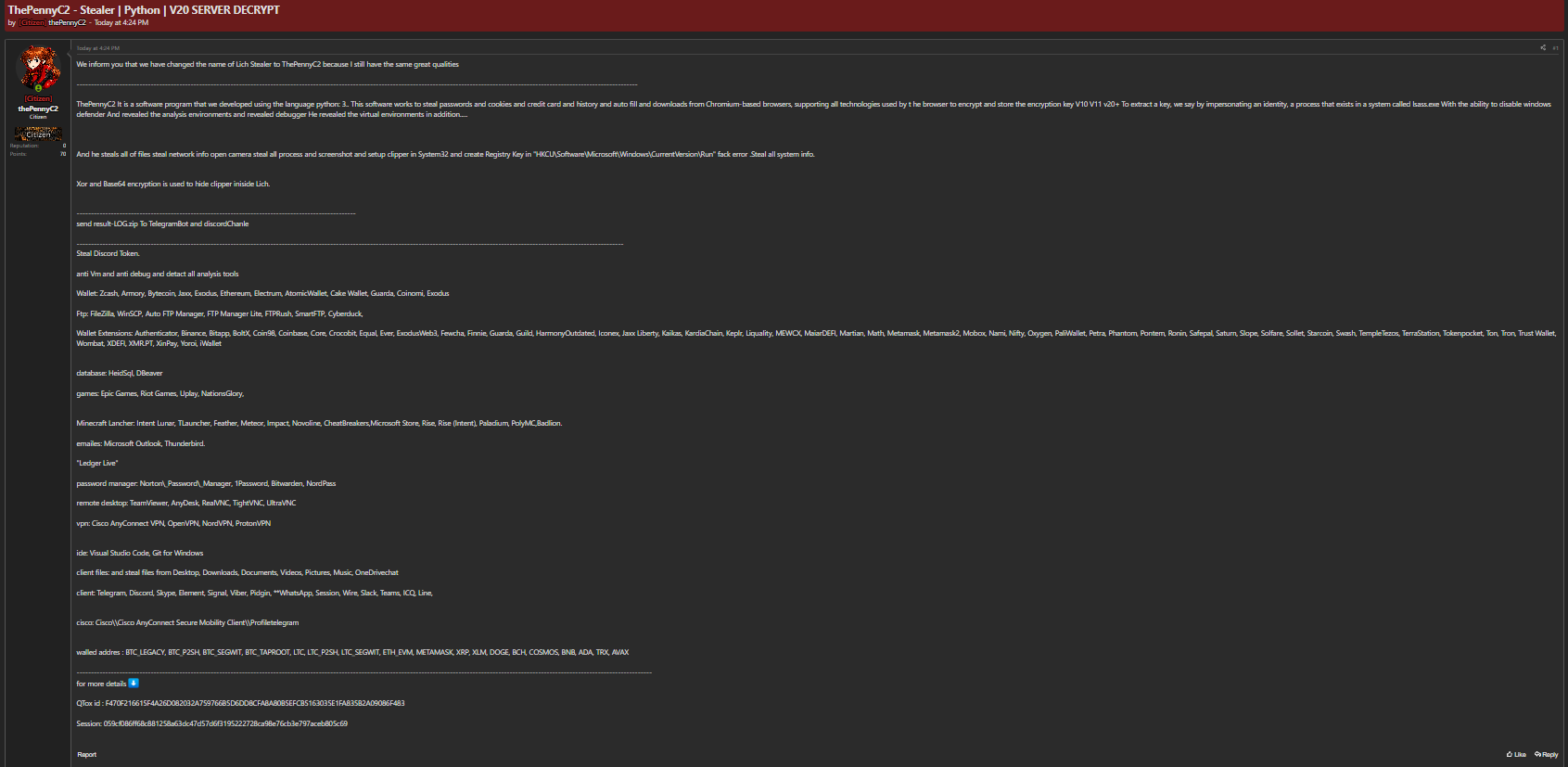
The threat actor behind this tool claims that it can extract saved passwords, browser cookies, credit card details, browsing history, autofill data, and even downloaded files. For an enterprise, the risk posed by such malware extends beyond individual account compromises. Cookies, in particular, represent a significant danger if stolen, as they can often be used to bypass multi-factor authentication (MFA) and gain session-based access to enterprise cloud environments and SaaS applications.
The Risk to Enterprise Credentials
Information stealers have become a primary vector for initial access in modern cyber attacks. Unlike traditional malware that might focus on system disruption, tools like ThePennyC2 focus on silent exfiltration. Once an adversary obtains an employee's session cookies or saved credentials, they do not need to exploit a complex vulnerability or bypass a firewall to gain entry. They simply walk through the front door using stolen, valid authentication tokens.
To assess your organization's exposure to such threats, it is critical to perform regular audits of your digital footprint. If the domain already looks exposed, use Dark Web Scanner before requesting a full report. Our proactive approach ensures that leaked credentials or malware log signals associated with your domain are identified before they are weaponized by adversaries.
Defense and Proactive Mitigation
Defending against malware such as ThePennyC2 requires a multi-layered approach to identity and endpoint security. Organizations should ensure that they have robust vulnerability assessments to identify gaps that might allow malware to gain a foothold on the network. Beyond patching, it is essential to focus on behavioral monitoring and the implementation of least-privilege principles to limit the impact of a potential breach.
Continuous monitoring through Dark Web Monitoring provides the visibility needed to respond to identity compromises in real time. By understanding the tools used by adversaries, enterprises can better tailor their defensive posture to detect exfiltration attempts early and rotate compromised credentials before they are used in high-impact campaigns.