PhonePe Data Leak Analysis: Assessing Impact and Risks
A reported data leak involving PhonePe user information has surfaced, raising significant concerns regarding identity safety and the broader security posture of fintech services. We analyze the implications of this incident and provide a roadmap for mitigation.

Key Takeaways
- Compromised contact information serves as a primary vector for smishing and account takeover attacks.
- Data breaches significantly impact enterprise trust and necessitate immediate regulatory and user-centric response.
- Proactive monitoring of underground channels is essential to detect the secondary sale or misuse of leaked databases.
- Fintech enterprises must prioritize API security and data egress controls to prevent mass exfiltration.
Understanding the Impact of the Reported PhonePe Leak
Data exfiltration involving major fintech platforms poses an immediate risk to the trust and digital security of millions of users. The report of leaked PhonePe database entries, containing phone numbers and associated contact information, highlights a significant shift in the risk profile for those in the digital payment ecosystem. When personal identifiers are compromised, the direct business impact goes beyond technical remediation, extending into regulatory scrutiny, reputational damage, and an increased likelihood of targeted social engineering campaigns against affected users.
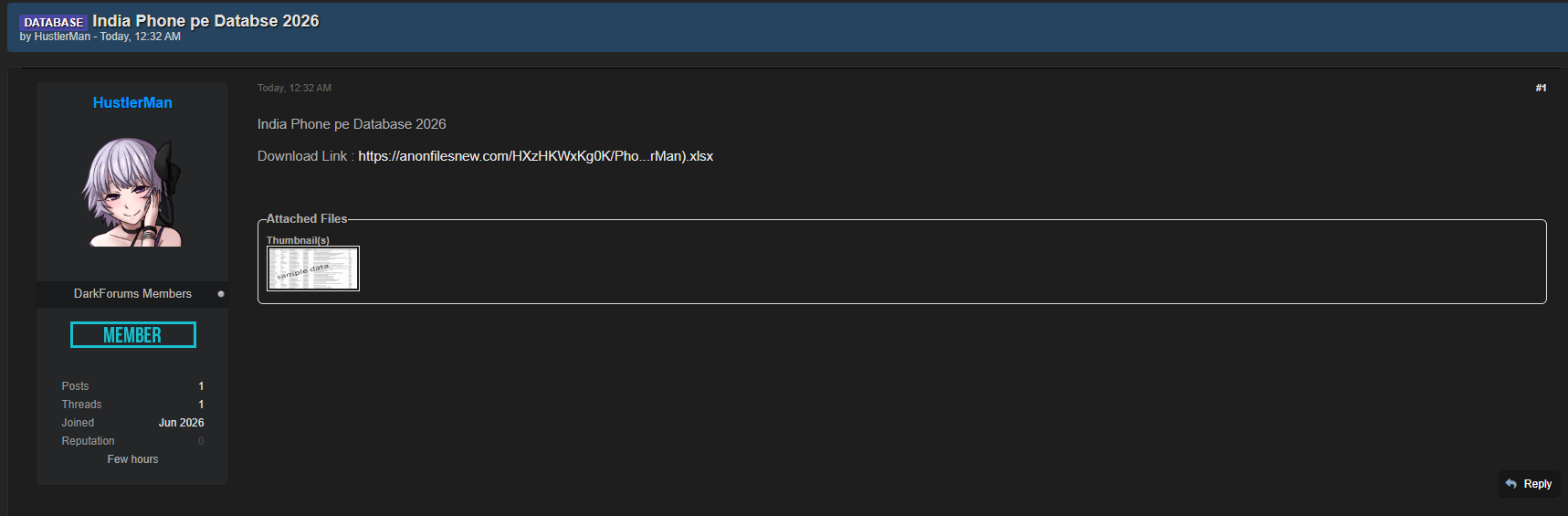
For organizations operating in the fintech sector, the primary challenge following such an incident is distinguishing between speculative claims and actual exposure. Our Vulnerability Assessments are designed to help teams identify whether their infrastructure or third-party integrations may have contributed to such leaks, ensuring that sensitive data flows are monitored with proactive security rigor.
Free exposure check
Dark Web Scanner
check dark web mentions, compromised account indicators, malware log signals, public breach exposure, and recent underground market activity for your domain.
Technical Risks and Identity Security
Leaked contact databases are the foundation of sophisticated fraud schemes. Attackers often use valid phone numbers to conduct SMS-based phishing, commonly known as smishing. By leveraging authentic data, adversaries craft highly convincing lures that bypass traditional user skepticism. Furthermore, these datasets are frequently aggregated with other public or breached records to build comprehensive user profiles, facilitating account takeover attempts that target legacy authentication methods.
To defend against these threats, enterprise security teams must adopt a layered approach. This includes the implementation of robust Dark Web Monitoring to keep track of any further dissemination of internal assets or leaked customer PII. Ensuring that your organization is not inadvertently leaking its own credentials through compromised software supply chains is critical in maintaining the integrity of your customer-facing applications.
Establishing a Proactive Security Posture
Managing the fallout of a breach requires more than just technical fixes. It demands a compliance-first, proactive operating model. Femto Security, with over 15 years of experience in the GCC region, emphasizes the importance of validating security controls long before an incident occurs. Through our specialized Red Teaming operations, we simulate real-world adversarial activity, allowing you to identify blind spots in your data protection lifecycle.
The threat landscape is continuously evolving. Beyond basic patching, enterprises must focus on the resilience of their APIs and the security of their data egress points. If your organization is part of the digital finance sector, maintaining high standards for PCI-DSS compliance and proactive vulnerability reduction is not optional, it is a business imperative.
Ultimately, the exposure of contact information is a catalyst for wider credential harvesting. We recommend that organizations prioritize the audit of their internal data access logs and ensure that multi-factor authentication is enforced across all sensitive endpoints to mitigate the risk of lateral movement following an initial breach. Through rigorous, AI-powered security assessments, FemtoSec helps leading enterprises in the GCC stay ahead of attackers, ensuring that your digital footprint remains resilient against evolving threats.
How to Defend Against Similar Threats
- Conduct a comprehensive audit of all customer-facing databases and data access points.
- Enforce multi-factor authentication across all user accounts to mitigate the impact of stolen credentials.
- Perform continuous monitoring of dark web sources to detect early signs of internal data leakage.
- Initiate security awareness training to educate users on identifying and reporting suspicious smishing attempts.
Threat Intel FAQ
What is the primary danger associated with this reported data leak?
How can businesses verify if their internal data has been exposed?
Could a similar threat affect your organization?
If your team may be exposed to a similar threat, FemtoSec can help validate blast radius, prioritize remediation, and connect the issue to a practical security program.
Related Threats
October 29, 2026
Transit Ticketing Breach Exposes 305k Records
A reported breach of an Egyptian public transit booking platform has exposed over 305,000 customer records, including national identification numbers, transaction identifiers, and travel histories. Security teams must prioritize credential resets, API auditing, and identity impersonation monitoring.
October 16, 2026
Returnero Leaks 200,000 Government Records
A dark web forum breach exposing 200,000 citizen records has highlighted severe identity theft and social engineering risks across public administration databases. FemtoSec provides deep technical analysis of the exfiltration vectors, MITRE ATT&CK mapping, and actionable containment measures for security teams.
September 20, 2026
Water Infrastructure Authority Database Leaked Online
A threat actor claims to have leaked more than 100,000 records from a public water management entity, exposing Peruvian national identity document numbers, citizen names, emails, and internal complaint registries.