Why Installs Turbo Bot Matters to Enterprise Security
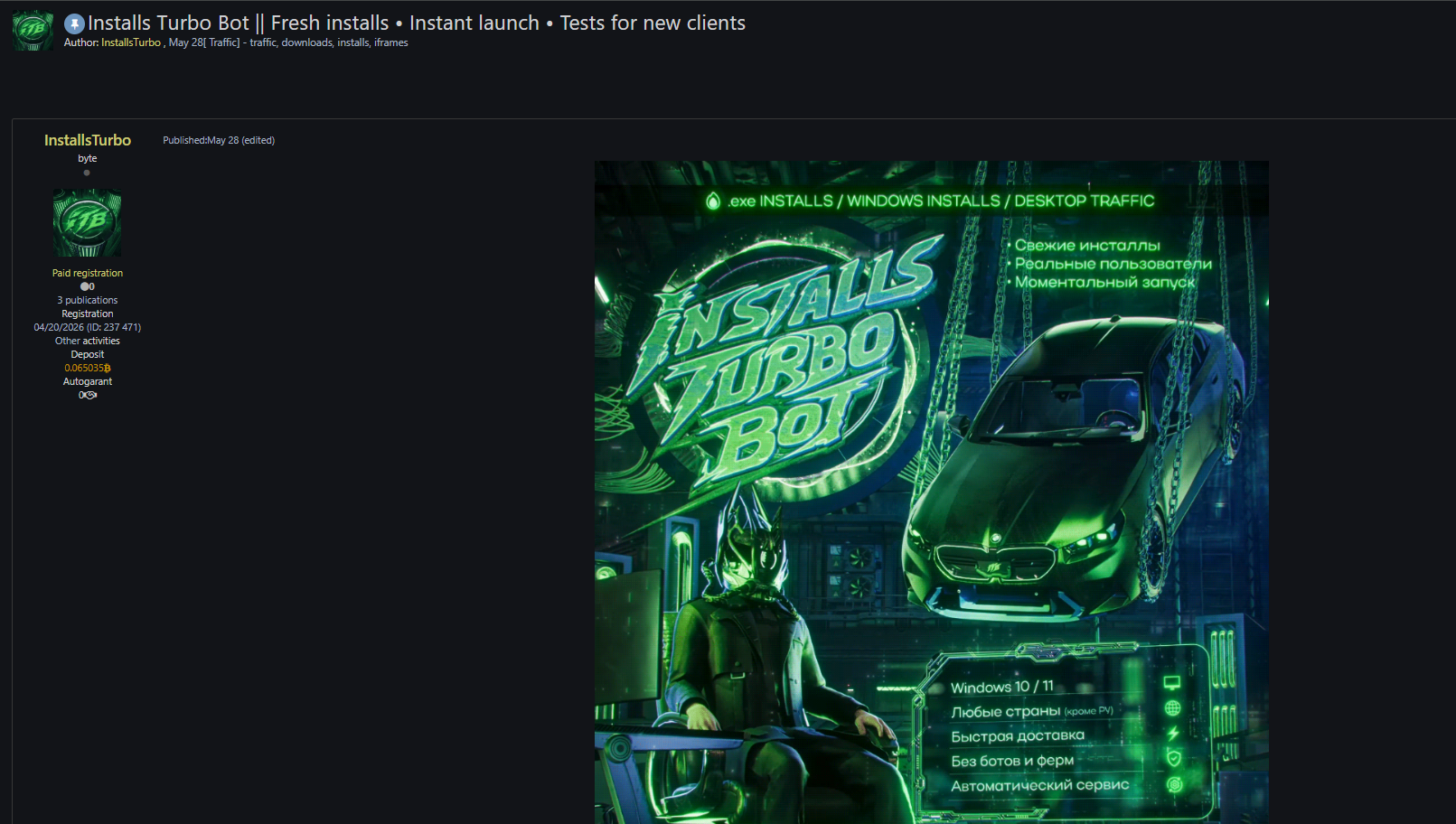
The value proposition of services like Installs Turbo Bot is built on speed, reach, and automation. By offering instant launches and Windows 10/11 traffic, these platforms enable threat actors to distribute malware at scale without needing to build custom distribution networks from scratch. In a modern enterprise environment, the risk here is not just the malware itself, but the persistence mechanisms and secondary payloads it might facilitate. If a bot is used to deploy initial access malware, the subsequent stages often involve lateral movement, credential harvesting, and eventual data exfiltration.
Understanding the Threat Lifecycle
Adversaries often use these automated installation services to seed environments with their initial access tools. Once an endpoint is compromised, the attacker may look for ways to escalate privileges, dump credentials from memory, or interact with active directory services. From a defense perspective, relying solely on legacy endpoint protection is rarely enough. Organizations need deep visibility into process execution patterns and network anomalies. This is where Penetration Testing becomes essential, as it allows security teams to validate if their existing controls would actually catch an automated installation attempt or a subsequent command and control signal.
Practical Defense and Mitigation
Defending against platforms that focus on 'fresh' installations requires a multi-layered security strategy that prioritizes behavioral detection over static signatures. If your organization detects suspicious software installations or unusual outbound traffic from non-standard processes, it is critical to initiate an immediate incident response workflow. We recommend focusing on the following areas:
Endpoint Hardening: Restrict software installation permissions across all workstations, particularly for Windows 10 and 11 environments.
Application Whitelisting: Implement strict policies that prevent unauthorized binaries from executing on sensitive endpoints.
Network Monitoring: Look for heartbeat signals that suggest an endpoint is acting as a participant in a larger botnet or traffic distribution network.
Credential Rotation: Assume that if a device is compromised by a bot, any local credentials stored on that device are potentially exposed.
Ultimately, the threat posed by tools like Installs Turbo Bot is an operational risk that impacts both your security posture and your regulatory compliance requirements. Maintaining a proactive posture against such threats requires a combination of continuous monitoring and a willingness to test your defenses against real-world scenarios. We advise leaders to look beyond the individual threat and consider how their broader infrastructure would stand up to automated, large-scale infiltration attempts.