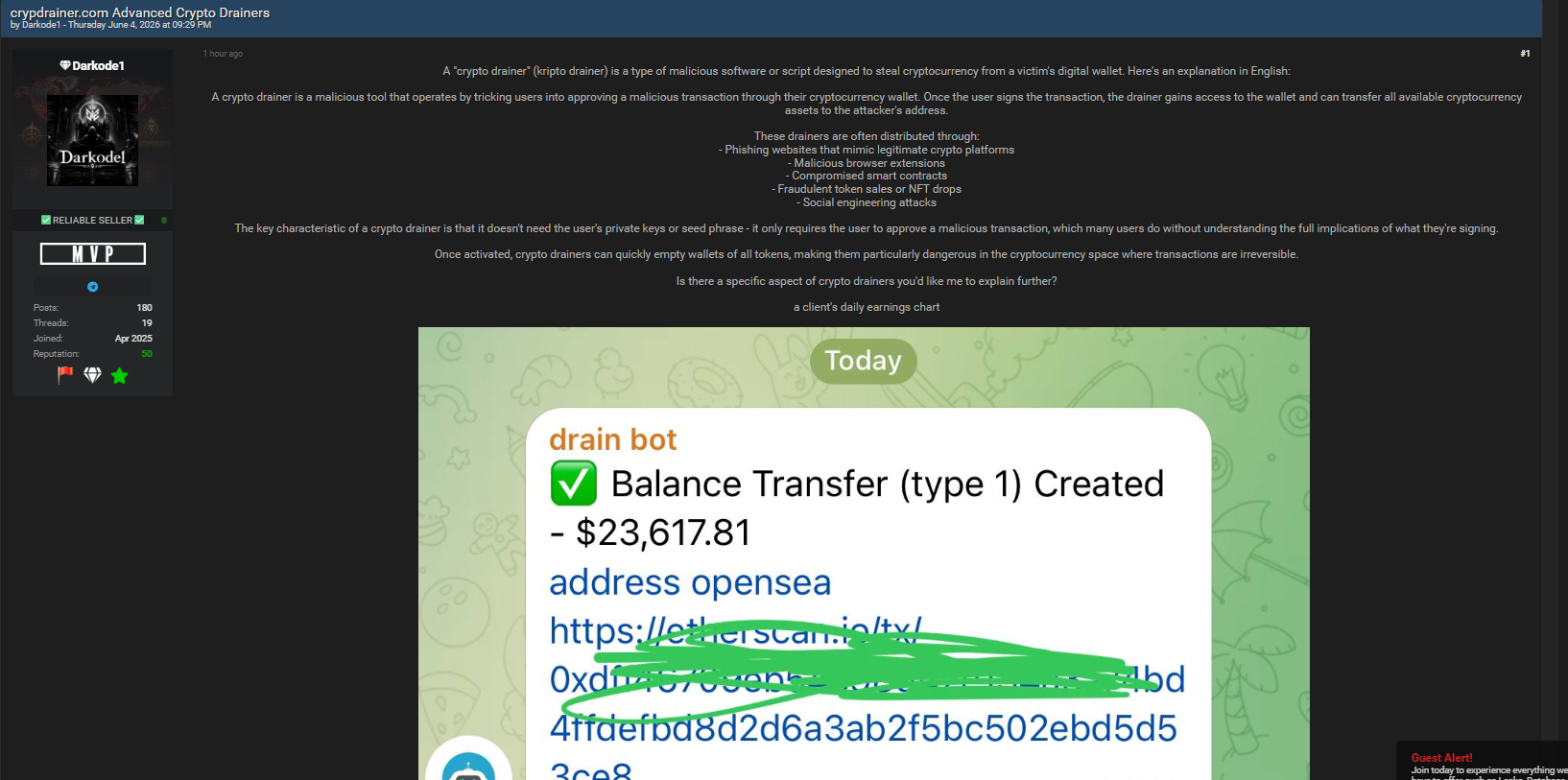
How CryptDrainer Operates
The mechanism behind this service is designed to manipulate the user experience during decentralized finance or wallet-based interactions. When a user is directed to a malicious interface controlled by the threat actor, the CryptDrainer injects a fraudulent transaction request. If the user approves this request, the protocol allows for the immediate drain of funds. This technique effectively bypasses the need for the attacker to possess the victim's seed phrase or private keys, making it a highly efficient tool for rapid asset liquidation.
Implications for Enterprise Security
For modern enterprises, especially those operating in the Web3 or fintech sectors, the rise of such specialized malicious services poses a direct risk. If your staff or customers are compromised, the financial loss can be immediate and irreversible. It is essential to maintain rigorous Smart Contract Auditing practices and educate stakeholders on the risks of transaction signing in untrusted environments. Furthermore, integrating Dark Web Monitoring into your security strategy ensures you remain informed if your organization is mentioned in the context of emerging threats or if your infrastructure is being utilized by threat actors.
Defensive Posture and Remediation
To defend against threats like CryptDrainer, organizations must adopt a layered security model. This includes enforcing strict browser security policies and utilizing hardware-backed authentication methods that provide clearer visibility into the nature of the transactions being signed. Continuous monitoring of your external footprint is critical to identifying potential weaknesses before they are leveraged by attackers. If you suspect an ongoing risk, immediate action is required to secure endpoints and revoke any potentially compromised permissions across your blockchain-integrated services.