WordPress Vulnerability Leak Exposure Risks
Recent reports suggest the circulation of alleged zero-day WordPress vulnerabilities on underground forums. Enterprises using WordPress should prioritize immediate surface assessment and rigorous patch validation to mitigate potential account takeover and data exfiltration risks.

Key Takeaways
- Alleged zero-day vulnerabilities targeting WordPress could allow for account takeover and data theft.
- The broad ecosystem of plugins and themes increases the attack surface for enterprise WordPress deployments.
- Proactive assessment of internet-facing assets is essential to minimize the window of exploitation.
- Continuous vulnerability management and source code integrity checks are required for enterprise-grade security.
Assessing the Threat of WordPress Vulnerability Leaks
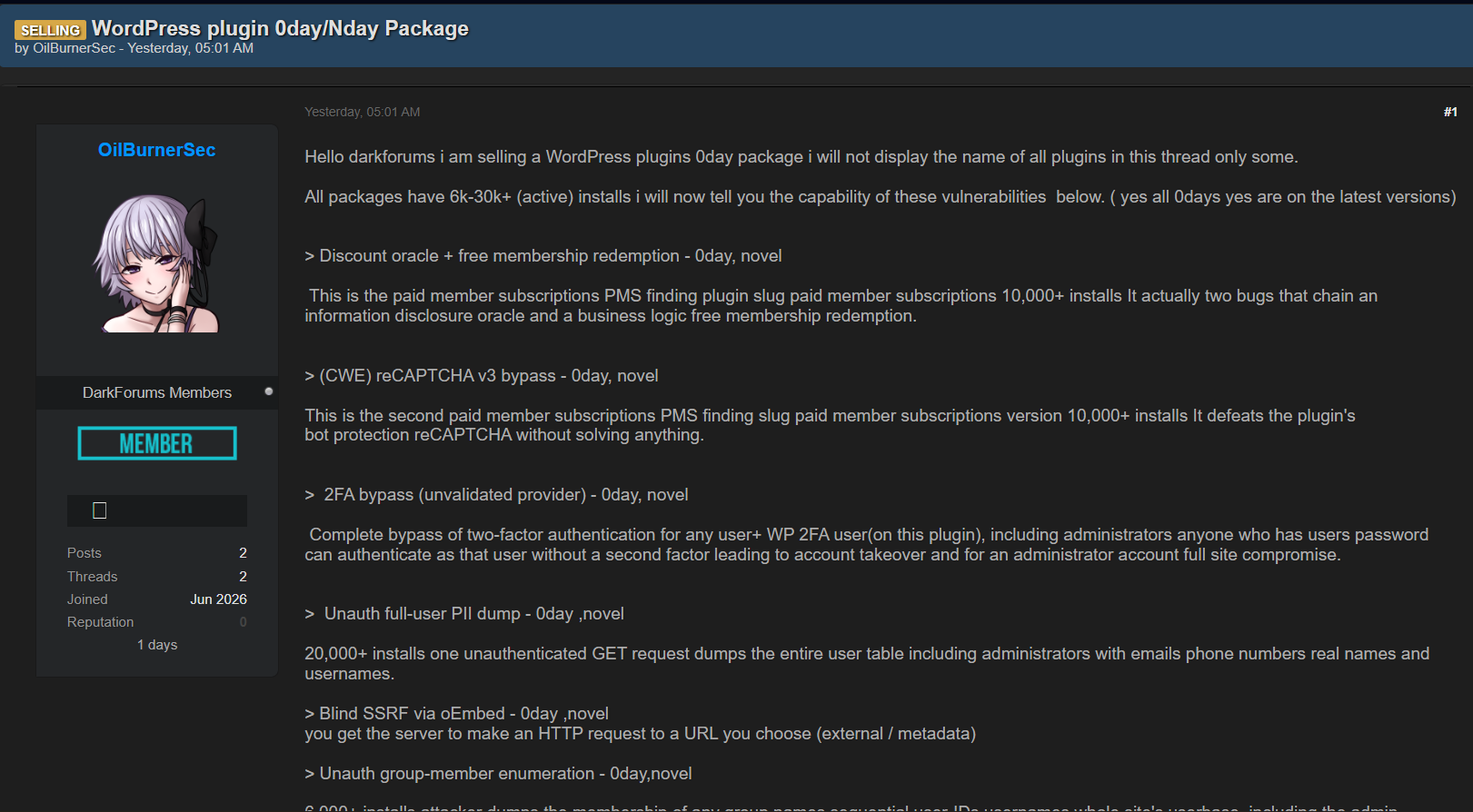
The cybersecurity landscape is constantly evolving, with new threats appearing frequently across the digital ecosystem. Recent reports from dark web forums have highlighted an alleged cache of zero-day and n-day vulnerabilities targeting WordPress installations. While specific technical identifiers remain unverified, the threat model suggests capabilities for unauthorized account takeover, security control bypass, and direct data exfiltration. For enterprises heavily reliant on the WordPress ecosystem, this development necessitates a transition from reactive patching to a proactive, defensive posture.
The Risk to Enterprise Infrastructure
WordPress is a pervasive content management platform. When vulnerabilities emerge, the blast radius is significant due to the sheer volume of plugins and themes that extend the core application. Attackers targeting these platforms often look for initial access vectors that allow them to establish persistence. Once a foothold is achieved, the threat often escalates to lateral movement within the network, potential cloud token theft, and compromise of backend databases.
The risk is not merely theoretical. When an exploit chain for a CMS becomes available, the window between disclosure and widespread exploitation is often measured in hours. Organizations that delay auditing their public-facing assets leave a clear door open for threat actors. We recommend a comprehensive Vulnerability Assessments cycle to identify weaknesses before they are cataloged in an attacker’s playbook.
Proactive Defense and Remediation
To defend against these emerging risks, security teams must treat their WordPress deployments as critical infrastructure. This involves more than simply updating software. A robust approach includes rigorous source code reviews to ensure that third-party plugins are not introducing hidden backdoors. Our Source Code Review service can provide the depth needed to validate the integrity of your custom and third-party extensions.
Furthermore, managing your external-facing footprint is essential. If your organization relies on WordPress for public-facing portals or internal communication, understanding your exposure is the first step toward effective mitigation. In addition to technical assessments, ensuring that your team is trained to recognize the signs of social engineering or unauthorized account access is vital for long-term resilience.
Free exposure check
Dark Web Scanner
check dark web mentions, compromised account indicators, malware log signals, public breach exposure, and recent underground market activity for your domain.
Integrating Security into the Development Lifecycle
The best time to secure a web application is during the development phase. By integrating security testing into your CI/CD pipelines, you can prevent vulnerable code from ever reaching production. For enterprises operating in high-risk environments, continuous validation of security controls is no longer optional; it is a fundamental requirement for maintaining regulatory compliance and customer trust. Whether you are addressing known vulnerabilities or defending against unknown threats, a compliance-first approach, grounded in expert-led testing, is the most reliable path forward.
How to Defend Against Similar Threats
- Immediately audit all WordPress plugins and themes for outdated versions or abandoned projects.
- Implement a strict patch management policy to address critical CVEs within 24-48 hours.
- Review access logs for signs of unauthorized administrative activity or unusual account creation.
- Engage in periodic vulnerability assessments to identify and close gaps in your attack surface.
- Use FemtoSec diagnostic tools to monitor for credentials or information leaks related to your domain.
Threat Intel FAQ
What is the primary risk associated with these WordPress vulnerabilities?
How can an enterprise protect itself from potential zero-day exploits in WordPress?
Could a similar threat affect your organization?
If your team may be exposed to a similar threat, FemtoSec can help validate blast radius, prioritize remediation, and connect the issue to a practical security program.
Related Threats
A threat actor is auctioning a zero-day exploit targeting an undisclosed WordPress plugin with over 10,000 active installations. The vulnerability allows low-privileged users with the create_users capability to escalate to Administrator, leading to full site takeover. Discover detection and containment strategies.
July 18, 2026
WP2SHELL: Critical Pre-Auth RCE in WordPress Core
A critical pre-authentication remote code execution vulnerability chain known as WP2SHELL has been discovered in WordPress Core, affecting millions of websites. Learn the mechanics of the REST API route confusion and SQL injection, and access concrete detection logic and remediation guidance.

An alleged sale of unpatched critical zero-day exploits targeting Floci, Gitea, libssh, and c-ares highlights a growing threat. While the zero-day claims on dark web forums are likely fraudulent, the weaponization of legitimate public research repositories poses an immediate risk to enterprise networks.