The Dynamics of the Underground Exploit Market
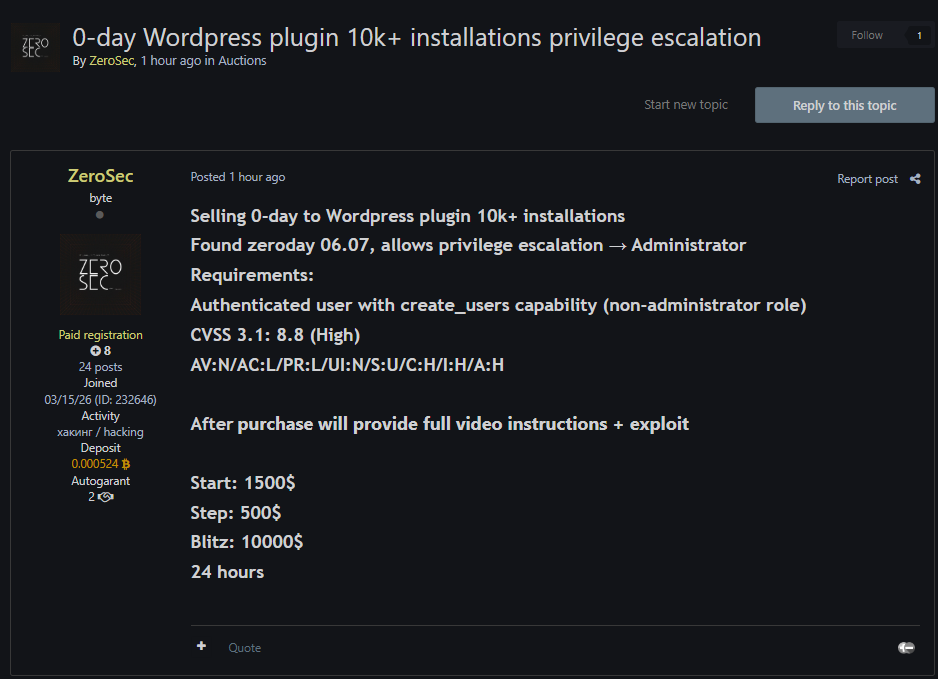
The sale of this privilege escalation exploit on a prominent underground forum like exploit.in highlights a growing trend where lower-tier software assets are targeted to compromise highly valued enterprise targets. WordPress, powering over forty percent of the web, represents a massive attack surface. While core security is heavily audited, the plugin ecosystem remains a fragmented landscape. Zero-day brokers target plugins with active installations in the tens of thousands because they offer a balanced profile: broad target availability and low defense oversight. A starting bid of $1,500 indicates the seller expects immediate interest from initial access brokers (IABs) who buy such exploits to package them into automated exploitation toolkits. Once packaged, these toolkits scan the web globally to identify, compromise, and resell access to high-value networks.
Enterprise Impact: The Vulnerability Beyond Simple Defacement
Many enterprises view WordPress as a simple marketing content management system (CMS), but compromised administrative accounts represent a direct pathway into broader corporate networks. If a public-facing website is compromised, attackers can use it as a command-and-control proxy, host phishing landing pages targeting enterprise clients, or launch internal attacks against databases connected to the same virtual private cloud (VPC). Additionally, database exfiltration of user records can trigger heavy regulatory scrutiny under regional compliance frameworks.
Audit and Detection Procedures
Because the vulnerable plugin is undisclosed, organizations must take proactive defensive measures. Defensive engineers should begin by auditing user privileges directly within the WordPress database. This query will reveal all accounts currently holding administrative privileges, allowing administrators to spot rogue accounts:
SELECT * FROM wp_users  posts
WHERE ID IN (
    SELECT user_id FROM wp_usermeta
    WHERE meta_key = 'wp_capabilities'
    AND meta_value LIKE '%administrator%'
);
In addition to database audits, security teams should continuously analyze web server logs. Monitor for unusual POST requests directed at admin-ajax.php or the WordPress REST API (/wp-json/) originating from non-administrative IP addresses, especially those associated with user modification or plugin endpoints.
Containment and Mitigation Guidance
To programmatically mitigate this risk before a vendor patch becomes available, developers can implement a Must-Use (MU) plugin. Creating a PHP script inside the wp-content/mu-plugins/ directory allows administrators to intercept capability checks before they are processed by vulnerable plugins. Below is an example of an operational mitigation filter:
<?php
add_filter('user_has_cap', function($allcaps, $caps, $args, $user) {
    if (isset($args[0]) && in_array($args[0], ['create_users', 'promote_users'])) {
        if (isset($_POST['role']) && $_POST['role'] === 'administrator' && !current_user_can('administrator')) {
            $allcaps['create_users'] = false;
            $allcaps['promote_users'] = false;
        }
    }
    return $allcaps;
}, 10, 4);
This filter explicitly checks if an account attempting to create or promote users is targeting the administrator role. If the actor is not already an administrator, the capability is dynamically revoked for that request, neutralizing the zero-day's privilege escalation vector.