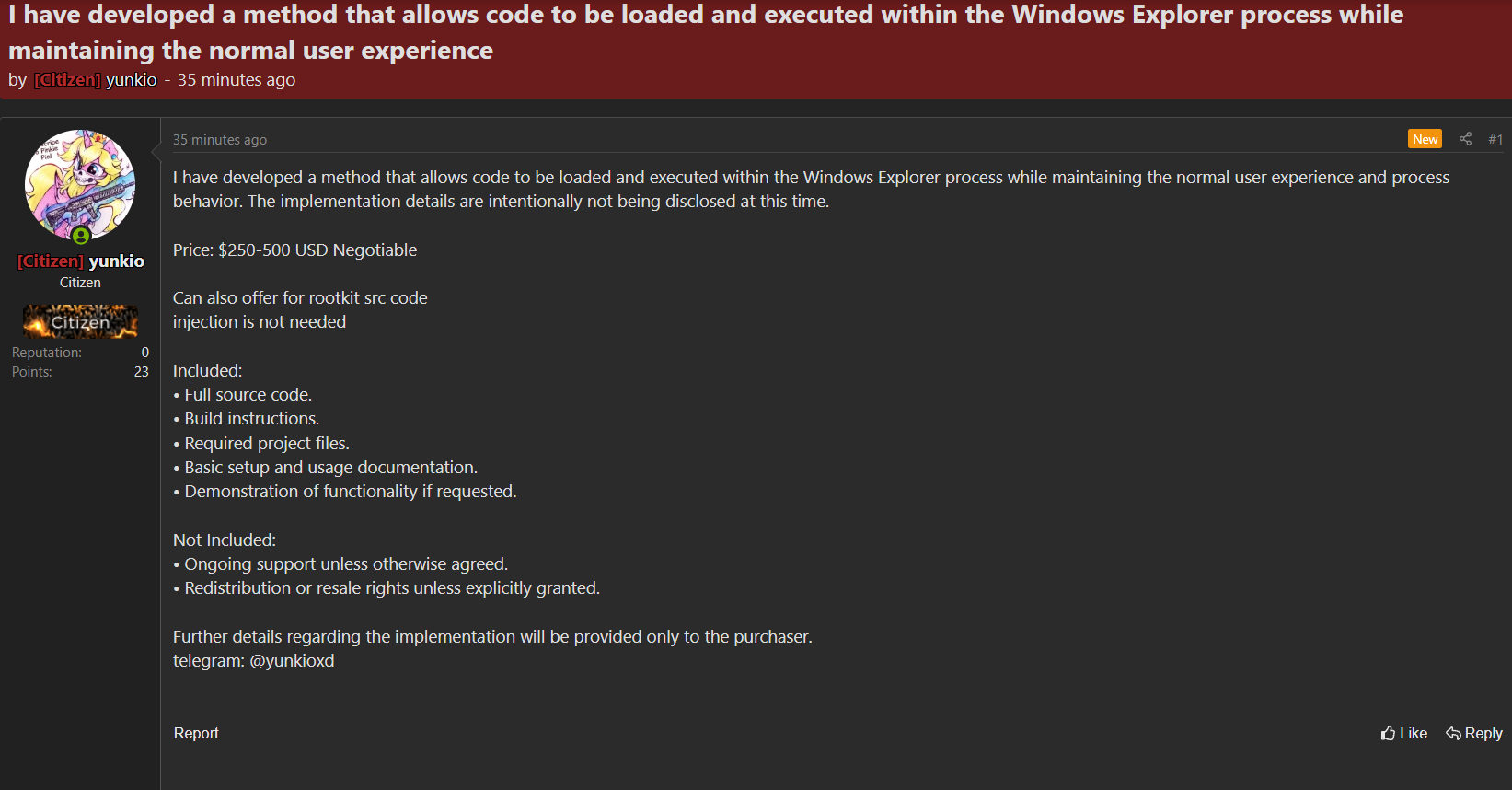
For enterprise environments, the ability to execute code within a standard system process without disrupting the user interface is a classic hallmark of techniques used to evade traditional detection mechanisms. When malicious activity blends into the background of a legitimate, high-trust process like explorer.exe, standard telemetry may struggle to flag the anomaly without highly tuned behavior-based monitoring. This underscores why traditional perimeter defenses are insufficient. Organizations must pivot toward Penetration Testing to identify how such methods could be used to bypass existing security controls and to validate the efficacy of current detection logic in their specific environments.
The Risk to Enterprise Operations
The primary risk associated with this type of exploit is the facilitation of initial access, privilege escalation, or long-term persistence that remains invisible to the end user. If a malicious actor successfully deploys this code, they could theoretically maintain control over an endpoint, exfiltrate sensitive files, or drop secondary payloads. Given that Windows Explorer operates within the user session, the threat is particularly potent for workstations that handle critical corporate data. Ensuring that your organization is not vulnerable to such exploitation requires a robust Vulnerability Assessments program that continuously reviews the security posture of endpoint configurations.
Proactive Defense and Mitigation Strategies
Defensive efforts should focus on robust endpoint detection and response (EDR) configurations and strict application control policies. Because this class of threat relies on manipulating standard system behavior, simply patching is often not enough; security teams must monitor for unauthorized DLL loading or unexpected process injection patterns associated with the explorer.exe process. Furthermore, the availability of such tools on underground forums illustrates the accelerated lifecycle of modern cyber threats, where technical capability is commoditized and sold as a service or ready-to-use package.
Organizations must adopt a layered defense strategy that includes:
Implementing principle of least privilege to minimize the impact of code execution within a user session.
Enhancing visibility into endpoint telemetry to detect abnormal process interactions.
Conducting periodic red team exercises to stress-test existing detection and response capabilities against non-traditional exploit methods.
Ensuring that software supply chain integrity is maintained through rigorous code and binary analysis.
By prioritizing proactive validation and continuous monitoring, enterprises can reduce the likelihood that such threats will lead to a broader security compromise. FemtoSec provides the expertise and the offensive security framework necessary to identify these gaps before an adversary does.