Technical Implications of PII Exposure
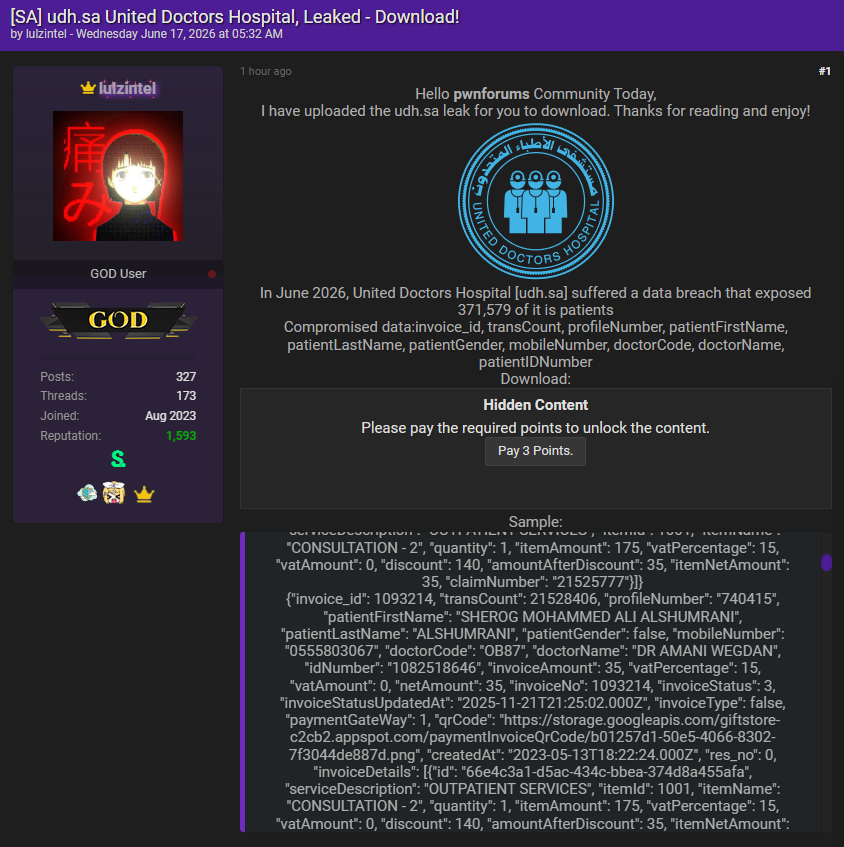
The unauthorized exfiltration of structured medical data, including doctor codes and patient IDs, allows malicious actors to conduct targeted phishing attacks or sophisticated social engineering campaigns. When medical data is combined with transactional details like invoice IDs, the potential for secondary fraud increases significantly. Organizations must recognize that patient data is high-value information on underground markets, often used to facilitate identity theft or insurance fraud. Proactive risk mitigation involves rigorous vulnerability assessments to identify potential gaps in data handling and storage, ensuring that administrative interfaces and database endpoints are not exposed to the public internet.
The Necessity of Proactive Defense
The healthcare sector is a primary target for threat actors because of the sheer volume of sensitive personal data processed daily. Effective defense strategies must shift from reactive patching to a proactive, continuous security model. This includes implementing strict access control measures, encrypting sensitive fields at rest, and ensuring that legacy systems are not providing an easy path for lateral movement. By integrating dark web monitoring, organizations can receive real-time alerts if their credentials or sensitive data are being discussed or offered for sale on underground forums, allowing for faster containment before the situation escalates. Healthcare providers must prioritize the security of their digital infrastructure, ensuring that compliance with local and international standards is maintained alongside robust operational security.
Remediation and Long-Term Security Posture
Recovering from a data incident requires a thorough investigation to identify the root cause of the unauthorized access. Whether the breach occurred due to a misconfigured API, a compromised administrative credential, or a known vulnerability in a web application, thorough log analysis is essential. All organizations should regularly validate their external-facing assets to ensure that no shadow IT or forgotten subdomains are providing an entry point for attackers. Establishing a robust security culture through ongoing training and simulation, such as red team operations, ensures that staff are prepared to detect and respond to potential threats before they result in a full-scale compromise of private patient data.