The Risks of Security Evasion
In modern enterprise environments, endpoint detection and response (EDR) agents and native security tools are the first lines of defense. The ability for a non-privileged user to disrupt Windows Defender highlights a critical need to re-evaluate local user permissions and system hardening policies. When attackers can neuter built-in protection, the entire security posture of the host is compromised, making it easier for malware or persistence mechanisms to remain undetected.
Organizations must treat the integrity of their endpoint security agents as a top priority. Relying solely on default configurations is often insufficient in the face of targeted offensive tools. It is crucial to perform regular Vulnerability Assessments to identify configuration gaps that might allow unauthorized tool execution or process manipulation.
Defense-in-Depth Strategies
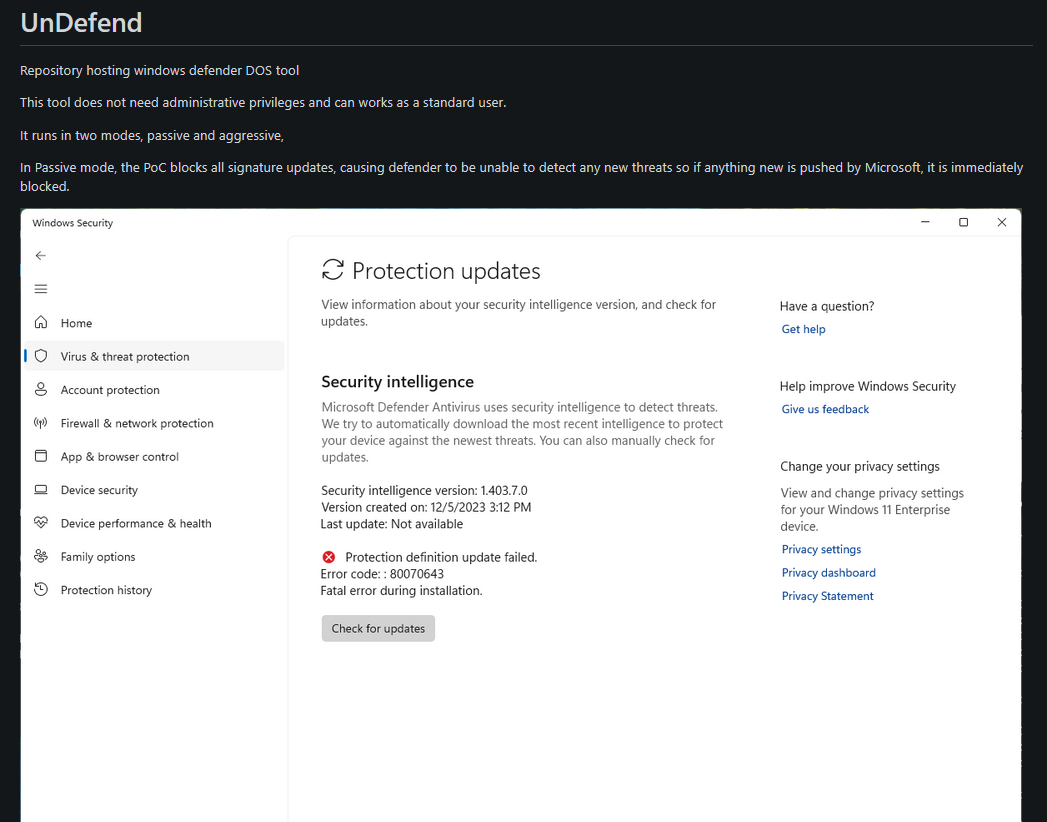
To combat threats like UnDefend, security teams should focus on proactive monitoring and restricted execution environments. Implementing application control policies that prevent the execution of unauthorized or untrusted binaries is essential. Furthermore, continuous monitoring of security service health alerts can provide early warning signs of tampering attempts.
If you suspect your environment has been targeted, or if you need to validate your current defenses against such offensive tools, consider our Penetration Testing services. Proactive validation helps uncover exactly how an attacker might attempt to exploit specific system behaviors in your unique network architecture.
Maintaining Resilient Infrastructure
Security is not a static state. As threat actors continue to develop tools aimed at stripping away visibility, enterprises must invest in multi-layered defense strategies. This includes not only robust endpoint configurations but also a rigorous approach to compliance and auditing. By aligning your security operations with established frameworks, you ensure that your defensive controls are documented, tested, and regularly refined against the latest threat intelligence.
The threat posed by UnDefend underscores the necessity of visibility into host-level activities. Even if a user lacks administrative rights, the cumulative impact of multiple small-scale disruptions can lead to a significant security incident. Prioritize least-privilege models and ensure that all security agents are reporting correctly to your central management console.