SaludNL Data Breach: Implications for Healthcare Security
A significant data breach impacting Servicios de Salud de Nuevo León has exposed over 62,000 sensitive records. We analyze the risks and provide mitigation strategies for enterprises.

Key Takeaways
- A 3.5 GB database from Servicios de Salud de Nuevo León has been exposed.
- The breach impacts over 62,000 records containing highly sensitive PII and payroll data.
- Exposed authentication tokens pose a severe risk of further unauthorized network access.
- Healthcare organizations remain prime targets for malicious actors seeking high-value data.
Overview of the Incident
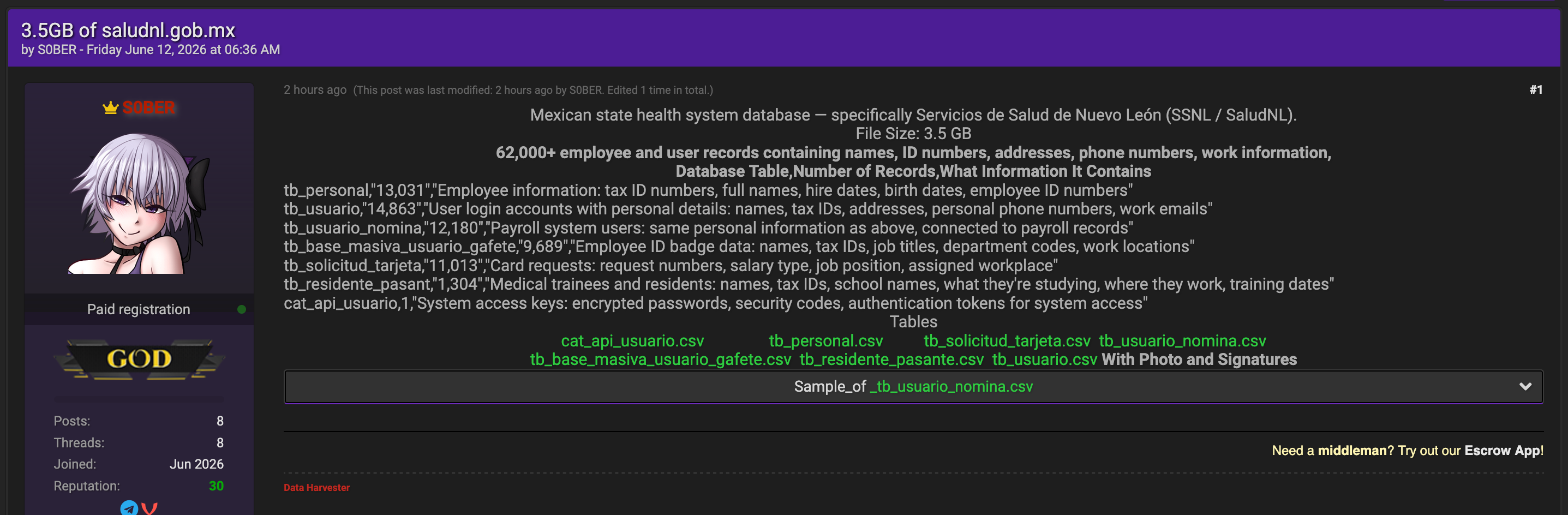
A recent data breach involving Servicios de Salud de Nuevo León (SaludNL) has surfaced on the dark web, where threat actors are selling a 3.5 GB dataset. This incident represents a severe compromise of sensitive information, affecting more than 62,000 employee and user records. The leaked data spans a wide range of sensitive identifiers, including full names, tax and national identification numbers, birth dates, physical addresses, contact information, payroll details, and internal work metadata. This exposure highlights the persistent threats facing the healthcare sector, where the combination of PII and sensitive medical trainee or employee data creates a high-value target for malicious actors.

The Impact of Exposed Credentials
The discovery of authentication tokens and encrypted passwords within this dump is particularly concerning. When such data is exposed, it provides an immediate pathway for attackers to attempt account takeover, credential stuffing, or further lateral movement within the affected organization’s network. Organizations must recognize that a breach of this magnitude is not merely an IT issue but a fundamental threat to business continuity and regulatory standing. The presence of medical records and payroll information underscores the necessity of robust Vulnerability Assessments to detect and remediate potential entry points before they are exploited.
Free exposure check
Dark Web Scanner
check dark web mentions, compromised account indicators, malware log signals, public breach exposure, and recent underground market activity for your domain.
Proactive Defense in the Healthcare Sector
Healthcare organizations are high-value targets due to the sensitivity of the data they manage. Relying on legacy security models is insufficient in the face of modern persistent threats. A proactive, compliance-first approach is essential for safeguarding organizational infrastructure. By implementing comprehensive Dark Web Monitoring, enterprises can gain real-time visibility into whether their credentials or sensitive internal documents are appearing in underground marketplaces, allowing for rapid containment and risk mitigation.
The breach of SaludNL serves as a sobering reminder that all entities—especially those in critical infrastructure sectors—must prioritize their defense mechanisms. This involves not only securing perimeter assets but also monitoring the internal and external environments for anomalous behavior. Enterprise-wide visibility is the only way to effectively manage the attack surface in a complex digital environment. Security is not a static state, but an active, ongoing effort to stay ahead of sophisticated adversaries.
At FemtoSec, we emphasize that proactive security starts with understanding your current exposure. Whether through regular assessment of internet-facing assets or by continuous monitoring of the dark web, visibility is the foundation of resilience. As threat landscapes evolve, particularly with the integration of AI in adversary operations, staying ahead requires an integrated, defensive strategy. Enterprise organizations should ensure their cybersecurity posture is resilient against unauthorized access, data exfiltration, and the exploitation of known vulnerabilities that often act as the initial point of entry for these large-scale database leaks.
How to Defend Against Similar Threats
- Immediately audit all administrative and user accounts for signs of unauthorized access.
- Implement mandatory password resets across affected systems to invalidate potentially compromised credentials.
- Conduct a comprehensive assessment of current network vulnerabilities to close potential entry vectors.
- Utilize dark web monitoring services to identify if organizational data is being traded or leveraged elsewhere.
Threat Intel FAQ
What kind of data was exposed in the SaludNL breach?
How can my organization prevent similar data breaches?
Could a similar threat affect your organization?
If your team may be exposed to a similar threat, FemtoSec can help validate blast radius, prioritize remediation, and connect the issue to a practical security program.
Related Threats

June 23, 2026
FHF Directory Leak Exposes 30,000 Healthcare Records
The Fédération Hospitalière de France has suffered an alleged database breach exposing 30,728 records, including names, emails, direct phone lines, and membership statuses. This leak exposes healthcare leadership to direct spear-phishing and vishing risks, requiring swift credentials resets and security audits.

June 23, 2026
Cyb3r Drag0nz Claims Breach of First Iraqi Bank
Kurdish hacktivist group Cyb3r Drag0nz claims to have breached First Iraqi Bank, allegedly exfiltrating sensitive KYC and user database records. Discover the technical attack chain, API exposure vectors, and actionable mitigation guidance to secure digital banking perimeters.

Addressing the reported leak of 120 million records from Bet365 requires immediate assessment. We examine the security implications for users and enterprises.