Technical Capabilities and Evasion Tactics
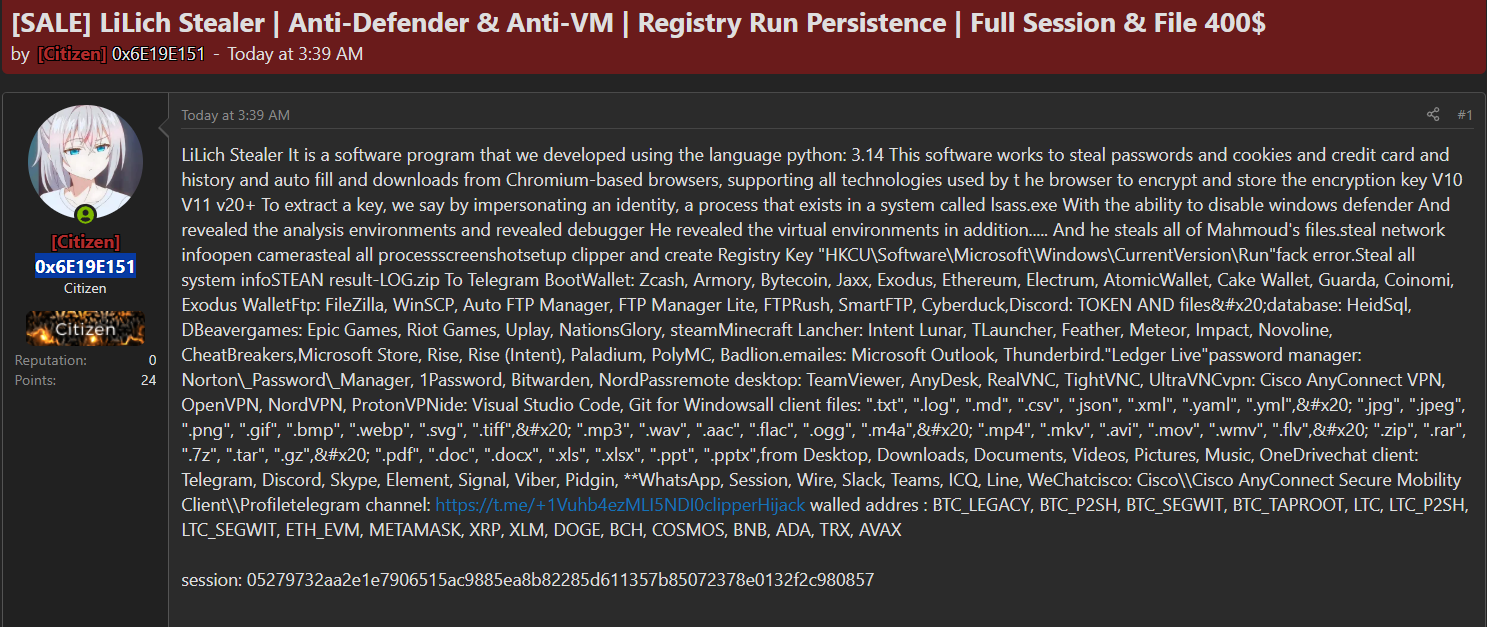
LiLich Stealer distinguishes itself through a multi-layered approach to stealth and persistence. By integrating anti-virus and anti-VM (virtual machine) evasion techniques, the malware attempts to remain hidden from standard security analysis environments and automated sandboxes. Furthermore, it utilizes Windows Registry Run keys to establish persistence, ensuring it executes consistently upon system startup. This is a classic indicator that should be prioritized during Vulnerability Assessments to ensure your configuration hardening is effective.
Once active, the malware performs a comprehensive sweep of the host. The list of exfiltrated data includes:
Stored browser passwords and authentication cookies
Credit card information
Cryptocurrency wallet data
Sensitive local files
Screen captures and webcam access
The malware also monitors the system clipboard for crypto-related transactions, a common tactic for hijacking digital assets in real-time. By disabling Windows Defender, it lowers the barrier for secondary payload delivery, potentially turning a single infection into a broader breach.
Proactive Defense and Risk Mitigation
Understanding the threat is only the first step. Enterprise security teams must shift toward a proactive posture that assumes breach indicators are already present within the network. This includes monitoring for anomalous registry modifications and unexpected Python-based processes originating from non-authorized directories. Free domain exposure scan: Use FemtoSec's Dark Web Scanner to check dark web mentions, compromised account indicators, malware log signals, public breach exposure, and recent underground market activity for your domain.
Organizations should also conduct regular reviews of their endpoint detection and response configurations. Because LiLich Stealer relies on established Windows persistence mechanisms, robust monitoring of autostart locations and registry changes can provide early warning signs of infection. Furthermore, because this malware targets browser-based credentials, deploying multi-factor authentication across all enterprise applications is a critical control to limit the utility of stolen passwords.
If you are concerned about your organization's resilience against such sophisticated threats, our team at FemtoSec is ready to help. Our 15+ years of experience in the GCC region, combined with our offensive security focus, allows us to simulate these types of attacks to test your defenses before they are put to the real-world test.