BNSP Data Breach: Impact and Mitigation Analysis
A significant data breach involving Badan Nasional Sertifikasi Profesi (BNSP) has exposed sensitive personal identification information. We analyze the implications for data security and provide strategic steps to mitigate risks associated with PII exposure.


Key Takeaways
- The BNSP breach exposed critical PII including NIKs and contact information.
- Leaked PII is a prime target for social engineering and identity theft.
- Proactive monitoring is essential to detect exposures early.
- A compliance-first security model helps maintain data integrity.
Overview of the BNSP Incident
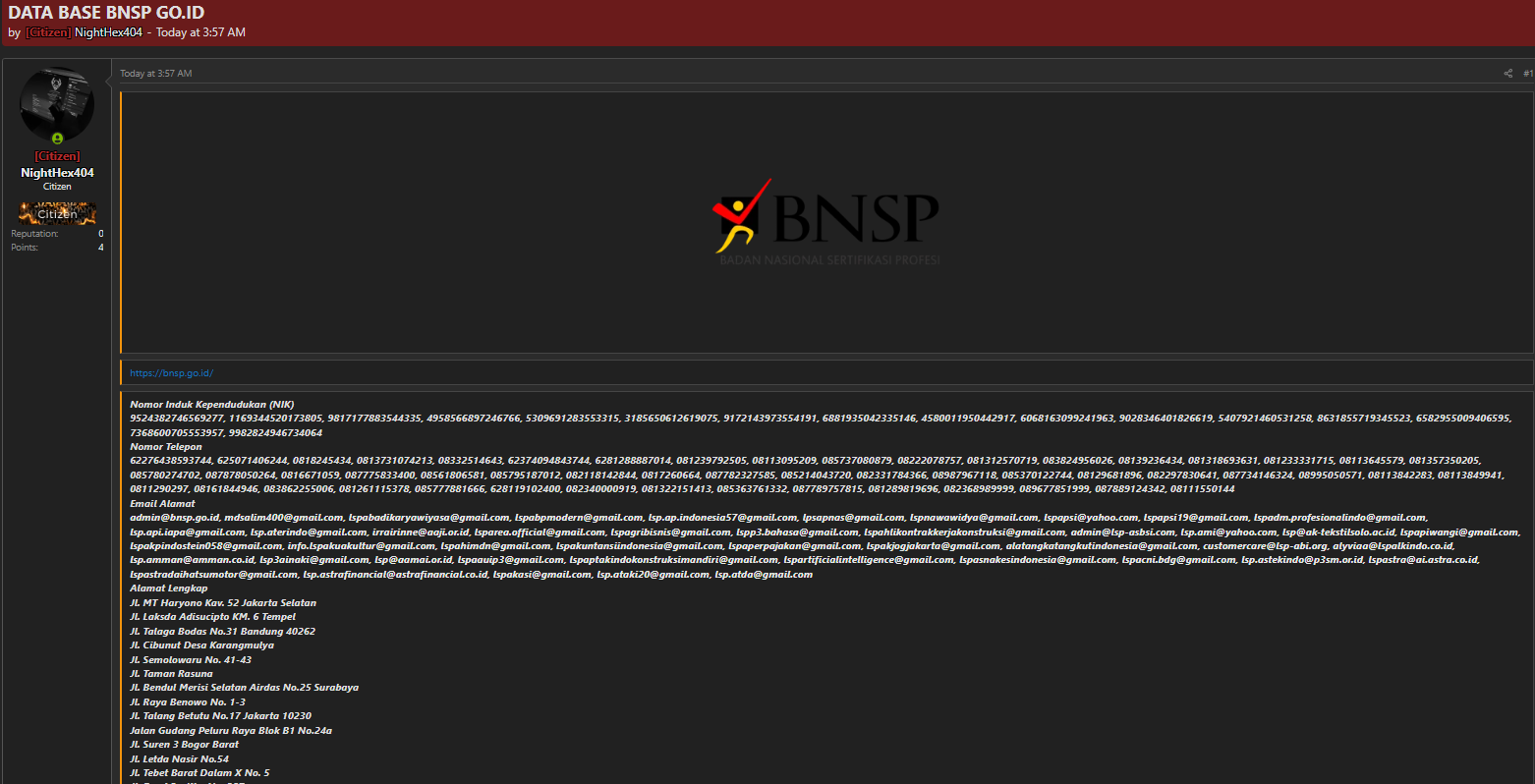
The reported data breach affecting the Badan Nasional Sertifikasi Profesi (BNSP) represents a serious incident within the public sector, raising concerns regarding the protection of sensitive citizen information. According to external reports, the exposed database includes personally identifiable information (PII) such as NIK (National Identification Number), full names, email addresses, phone numbers, postal codes, and regional data. For any organization handling large volumes of citizen data, such an incident underscores the critical necessity of robust Vulnerability Assessments to preemptively identify and remediate security gaps.
The Risk of PII Exposure
When sensitive datasets like NIKs and contact details are leaked, the implications for the affected individuals and the organization are profound. Threat actors often leverage this information to conduct sophisticated social engineering campaigns, identity theft, or targeted phishing attacks. The combination of NIKs with contact details is particularly dangerous as it provides attackers with the components necessary to bypass basic verification checks. Enterprises that fail to monitor their own digital footprint risk being caught off guard by similar exposures.
Strategic Defense and Proactive Monitoring
Organizations must adopt a proactive security operating model to defend against these persistent threats. This involves continuous oversight of the entire digital infrastructure. By integrating Attack Surface Management, firms can gain full visibility into their internet-facing assets, identifying misconfigurations and exposed databases that might otherwise serve as entry points for attackers. In an era where data is the most valuable asset for both legitimate businesses and malicious actors, assuming a reactive stance is no longer sufficient.
Free exposure check
Dark Web Scanner
check dark web mentions, compromised account indicators, malware log signals, public breach exposure, and recent underground market activity for your domain.
Building Organizational Resilience
To prevent future incidents, it is vital to treat cybersecurity as a continuous, rather than point-in-time, requirement. This includes regular testing of internal applications and third-party integrations to ensure that sensitive user information is encrypted and access is strictly controlled based on the principle of least privilege. Furthermore, security awareness training is essential to ensure that employees, who are often the first line of defense, are equipped to recognize and report suspicious activity. For enterprises operating in complex regulatory environments, ensuring compliance with data protection standards is not just a legal obligation but a core component of risk management. Addressing vulnerabilities at the source is the best way to safeguard against data theft and maintain the trust of your stakeholders.
Ultimately, a compliance-first approach combined with rigorous offensive security testing can drastically reduce the window of opportunity for an adversary. By identifying exposures before they are weaponized by threat actors, your organization can maintain a superior security posture in an increasingly hostile digital landscape.
How to Defend Against Similar Threats
- Conduct an immediate audit of data storage and access controls.
- Implement comprehensive monitoring for credential and data leaks.
- Review and update employee security awareness training protocols.
- Deploy regular vulnerability assessments to identify hidden infrastructure risks.
Threat Intel FAQ
What kind of data was exposed in the BNSP incident?
How can organizations protect their data from similar breaches?
Could a similar threat affect your organization?
If your team may be exposed to a similar threat, FemtoSec can help validate blast radius, prioritize remediation, and connect the issue to a practical security program.
Related Threats

An alleged 300-million-user database leak highlights the growing threat of repackaged infostealer logs on the dark web. While promoted as a direct corporate breach, research shows the data stems from distributed endpoint infections, exposing enterprises to intense credential stuffing and session hijacking risks.

August 17, 2026
SafePal Customer Data Leak Highlights E-Commerce Security
A critical web-facing vulnerability in a third-party order-tracking plugin has exposed the personal information and physical shipping addresses of 39,798 hardware wallet users, raising severe secondary threat vectors including high-precision spear-phishing and regional social engineering campaigns.

July 10, 2026
DevOps Credential Leak Exposes Private Repositories
A confirmed breach of a major IT consultancy highlights the critical threat of exposed DevOps credentials. Learn how compromised Azure PATs, RSA keys, and private repositories put enterprise supply chains at risk and how to detect and contain these threats.