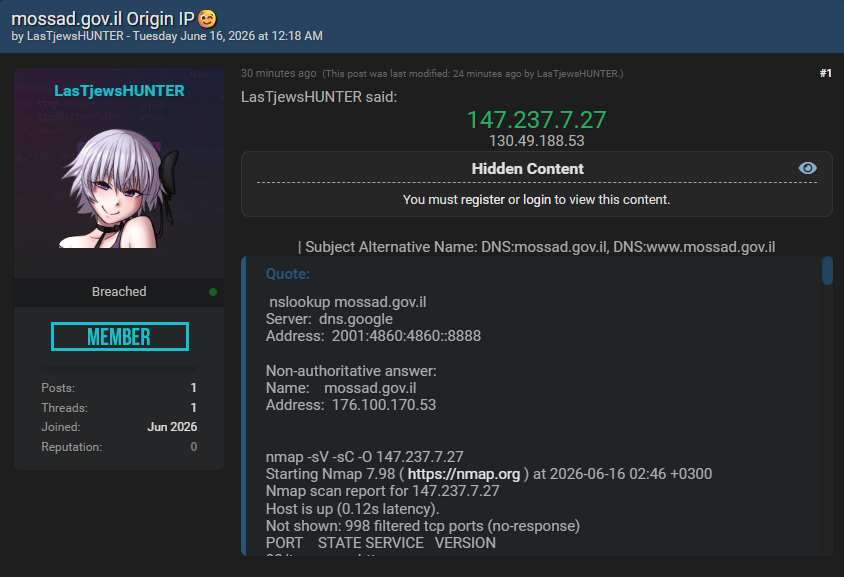
The current incident regarding the potential exposure of governmental network assets demonstrates how granular technical data can be weaponized. For an enterprise, the loss of this internal reconnaissance data allows attackers to craft more accurate social engineering lures, perform targeted vulnerability research against exposed edge devices, or plan sophisticated lateral movement strategies. Without a robust Attack Surface Management strategy, organizations often lack the necessary visibility to monitor what information is being publicly or illicitly indexed.
Why Infrastructure Visibility Matters
Infrastructure intelligence is the foundation of offensive security. Attackers focus on discovering 'origin IPs' or backend server configurations that bypass standard security controls. When such details appear on underground forums, the risk of a breach escalates from potential to highly probable. Organizations must treat their network topology as a sensitive asset. Continuous monitoring through Dark Web Monitoring is not just about finding leaked credentials; it is about identifying when your technical infrastructure is being actively discussed or sold in adversarial circles.
Proactive Defense and Remediation
Remediation after a data leak requires a shift toward a proactive operating model. Merely patching known vulnerabilities is insufficient if your network architecture remains predictable to a determined adversary. A comprehensive Penetration Testing program can help validate how much of your internal structure is visible from the outside. By simulating these real-world reconnaissance efforts, your security team can proactively obfuscate, segment, or harden the assets that would otherwise be the primary targets of an initial access attempt.
Enterprises should adopt a 'assume breach' mindset, particularly when sensitive infrastructure details are circulated in the public domain. This involves rotating SSL certificates, reassessing DNS configurations, and potentially shifting backend services behind hardened proxies. If your infrastructure has been cataloged by a threat actor, the immediate goal is to disrupt their future exploitation plans by changing the underlying configuration that they rely on to execute their objectives. Through consistent governance and regular security posture audits, enterprises can transition from reactive cleaning to strategic resilience.