Technical Implications
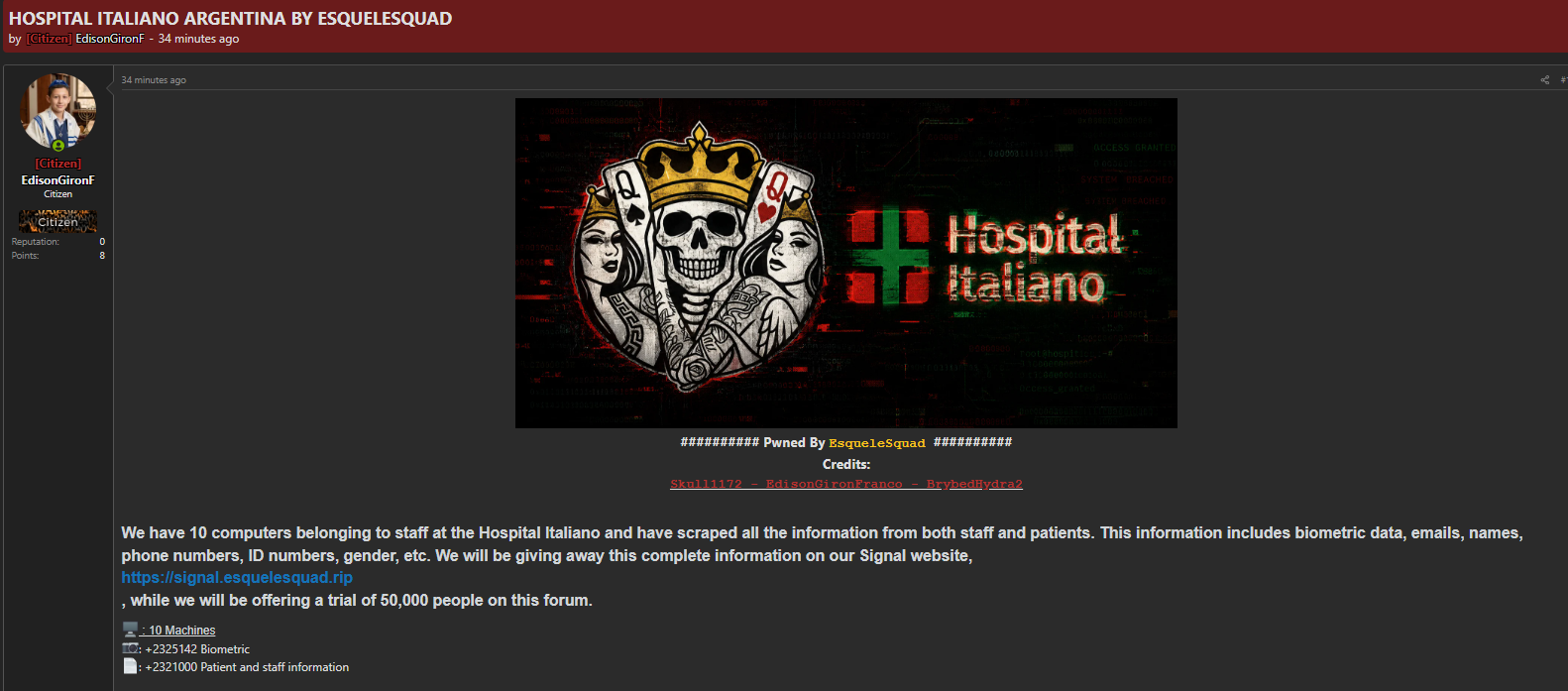
The exposure of biometric and identification data presents a critical risk that extends far beyond standard credential theft. Unlike passwords, biometric identifiers cannot be reset if compromised, leading to a permanent increase in identity theft risk for the affected individuals. From an enterprise perspective, the exfiltration of this data may suggest a failure in Attack Surface Management, potentially due to unsecured databases, misconfigured APIs, or compromised administrative access.
Healthcare environments are particularly vulnerable to lateral movement if initial access is gained through peripheral systems. Once inside, attackers often seek to escalate privileges to reach primary Electronic Health Record (EHR) systems or administrative databases. Organizations must prioritize continuous monitoring and rigorous Penetration Testing to identify and remediate these pathways before they are exploited.
Security and Compliance Risks
The nature of the compromised data places the organization at substantial risk regarding regulatory compliance. In many jurisdictions, the loss of medical and biometric data triggers severe mandatory reporting requirements and significant financial penalties. Beyond regulatory pressure, the reputational damage can erode patient trust, which is a foundational element for any healthcare institution. This incident serves as a reminder that healthcare cybersecurity must evolve from a reactive stance to a proactive operating model that emphasizes both defensive hardening and early threat detection.
Strategic Recommendations
To mitigate the risks identified in this incident, healthcare providers should adopt a multi-layered security strategy:
Implement identity-centric security: Move beyond simple password policies toward zero-trust architectures, ensuring that access to sensitive databases is restricted and authenticated with multi-factor solutions.
Audit external-facing assets: Regularly conduct scans to identify exposed databases or misconfigured endpoints that could provide an entry point for unauthorized access.
Data minimization and encryption: Ensure that sensitive biometric and patient records are encrypted at rest and in transit, and evaluate if redundant data sets can be purged to reduce the potential impact of future breaches.
Continuous visibility: Utilize advanced monitoring to identify anomalies in access patterns that may indicate a breach in progress, rather than relying on point-in-time assessments.
By focusing on these areas, healthcare enterprises can better protect their sensitive assets and ensure continuity of care in an increasingly hostile threat landscape.