Ransomwarehigh
Audit Team Ransomware Group Targets Organization in Russia
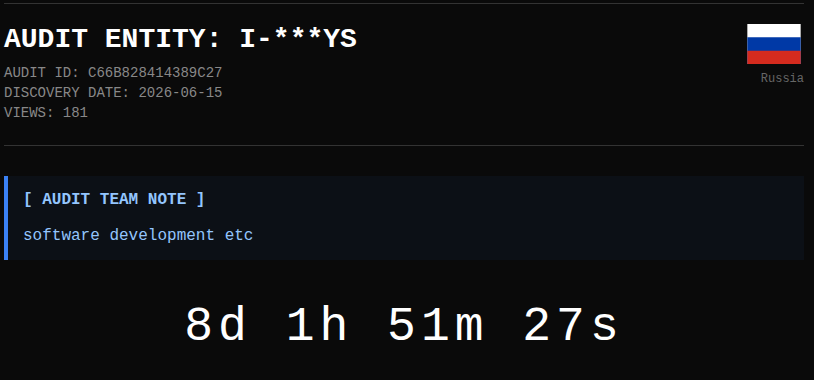
A new ransomware incident involving the Audit Team group has emerged, targeting an organization in the Russian Federation with threats of data exfiltration.

A new ransomware incident involving the Audit Team group has emerged, targeting an organization in the Russian Federation with threats of data exfiltration.
The emergence of the Audit Team ransomware group as a notable actor in the global threat landscape underscores the persistent risk that ransomware poses to enterprises today. Recent reports indicate that the group has targeted an unidentified organization based in the Russian Federation, signaling an expansion of their operational reach. The group claims to have successfully exfiltrated sensitive data and has set a short window of 8 to 9 days for the publication of these materials, a hallmark of double-extortion tactics.
Ransomware is no longer just about encrypting files and demanding a payment to restore access. Modern threat actors like Audit Team prioritize data exfiltration as a primary leverage point. Even if an organization has robust backup and recovery processes, the threat of leaking proprietary information, customer data, or internal documentation forces victims into a difficult position. This proactive approach to cyber extortion requires businesses to rethink their perimeter defenses.
To mitigate these risks, organizations must move beyond simple reactive measures. Proactive strategies such as regular Penetration Testing are essential to identify how attackers might gain the initial foothold required for such intrusions. By simulating real-world adversarial activity, your security team can close gaps before they are exploited.
Threat intelligence is not a one-time activity; it requires constant vigilance. Organizations often lack visibility into what information is already available to attackers on the dark web. Whether it is leaked credentials, misconfigured public assets, or remnants of past breaches, these artifacts provide the building blocks for modern ransomware operations.
If you are concerned about potential indicators of compromise or public exposure, it is vital to audit your digital footprint. If the domain already looks exposed, use Dark Web Scanner before requesting a full report. Understanding your current attack surface is the first step in hardening your infrastructure against sophisticated criminal groups.
The threat from groups like Audit Team necessitates a layered security approach. This includes not only technical controls but also rigorous compliance with international standards such as PCI-DSS and SOC 2. By aligning your operations with these frameworks, you ensure that security is built into your business processes rather than bolted on as an afterthought. Furthermore, conducting comprehensive Vulnerability Assessments ensures that you are constantly reducing the windows of opportunity available to attackers who leverage known vulnerabilities to deploy their malicious payloads.
Free exposure check
Dark Web Scanner
check dark web mentions, compromised account indicators, malware log signals, public breach exposure, and recent underground market activity for your domain.
Staying ahead of these threats requires an ongoing commitment to cybersecurity, backed by intelligence-led operations that focus on the specific Tactics, Techniques, and Procedures (TTPs) of groups currently active in your region. By prioritizing visibility and proactive validation, organizations can significantly reduce the likelihood of a successful ransomware engagement.
If your team may be exposed to a similar threat, FemtoSec can help validate blast radius, prioritize remediation, and connect the issue to a practical security program.

September 9, 2026
The Vexy ransomware group has published an extortion listing targeting Argentinian retailer Librería Santa Fe, claiming 24.2 GB of exfiltrated data with a 20-day publication ultimatum. Explore technical analysis, attack chains, and defensive containment strategies.

The Delhi Heart and Lung Institute has fallen victim to a major breach by the Krybit ransomware syndicate. The threat actors claim to have exfiltrated 22 GB of sensitive hospital, patient, employee, and corporate data, threatening public release within a short four-day window.
October 16, 2026
Play ransomware operators have targeted United States management consulting firm The Innovation Group, publishing claims on their dark web leak site with a four to five day deadline to release stolen corporate data.
http://6tdqqaxftvradka5d2frzgwixis7fmro7rfh4ettzcx7jfapkebe6jad.onion/entity/D1DDFB2A56855328