Deep Technical Analysis of the ATHR Platform
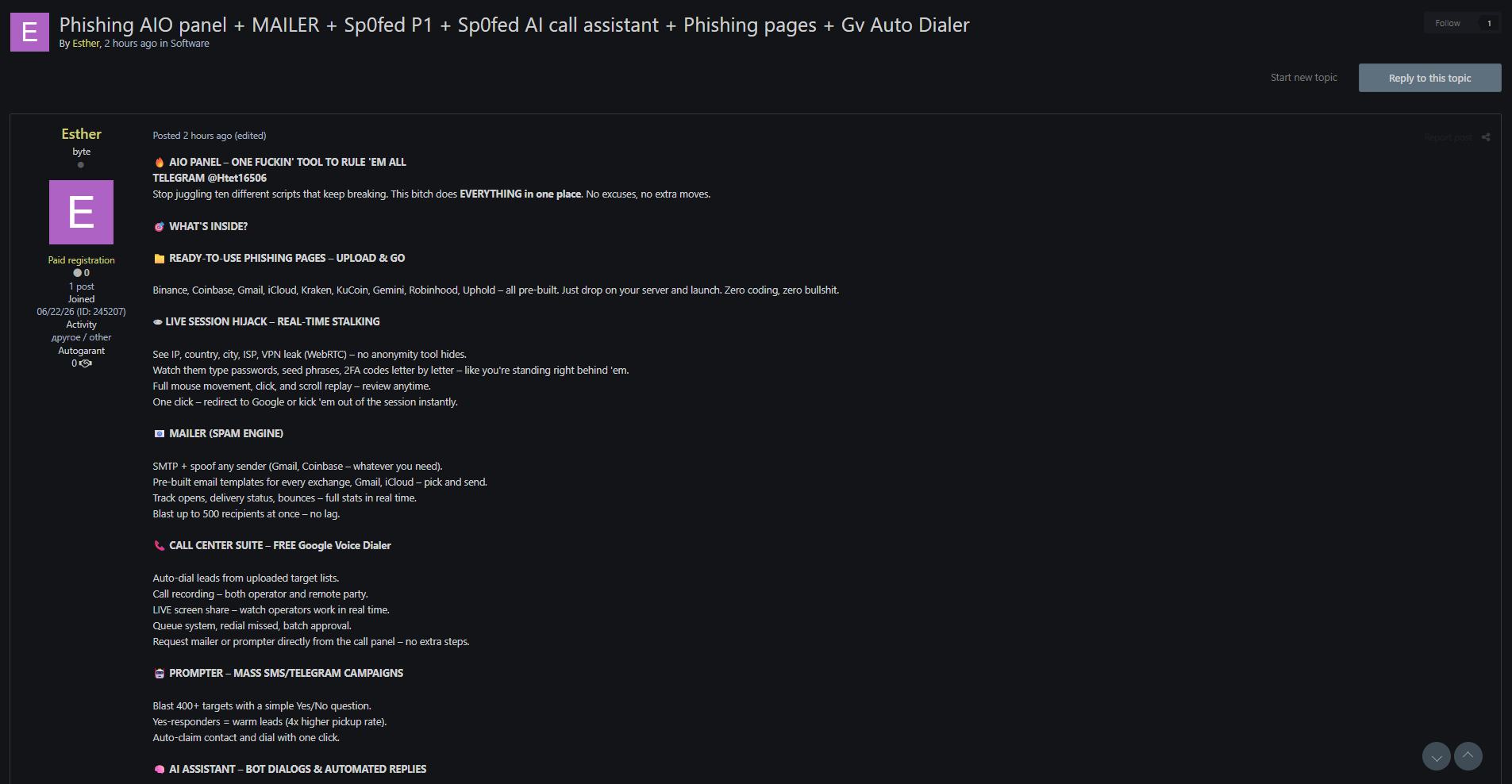
A deep dive into the architecture of the ATHR platform reveals a highly consolidated and optimized platform built on legitimate, open-source telephony standards and advanced web services. Unlike historically fragmented setups that required extensive manual configurations of Asterisk servers, SIP trunks, and lookalike domains, ATHR packages these dependencies into a streamlined user interface. The backend relies on Asterisk VoIP servers integrated with WebRTC endpoints, allowing threat actors to manage interactive voice responses and complex call routing directly from a browser. To maximize operational efficiency, the platform utilizes advanced AI voice synthesis. Automated voice interactions are driven by scripted AI agents powered by the Cartesia Sonic 3 text-to-speech engine, which enables conversational, low-latency voice responses that closely mimic professional human helpdesk operators.
The delivery mechanism relies on an integrated email marketing infrastructure preloaded with polished HTML templates. These templates specifically impersonate eight high-value brands across email service providers and cryptocurrency platforms: Google, Microsoft, Coinbase, Binance, Gemini, Crypto.com, Yahoo, and AOL. This deliberate focus on highly liquid crypto exchanges and key business communication portals underscores the platform's focus on immediate financial gain and high-value corporate access. The initial emails do not contain malicious attachments, hyperlinks, or exploit code. Rather, they display plain-text alerts such as unauthorized login warnings, complete with fake timestamps and IP addresses, accompanied by a toll-free customer support number. Because the emails contain zero typical technical Indicators of Compromise, standard Secure Email Gateways often fail to block them, allowing the messages to reach user inboxes undetected.
The 10-Step AI-Vishing Attack Chain
The lifecycle of an ATHR-driven attack is highly structured and relies on a ten-step communication playbook designed to build trust and achieve victim compliance on autopilot. When a user calls the support line displayed in the spoofed email, the platform routes the inbound call via WebRTC to an AI agent that executes the following workflow: